AI
Strategy Design
AI-Powered Service Dog Training Assistant
How might AI support the training of service dogs?
Role
Strategy Design
Designed UI elements and animations, and edited the final project video
Conducted research with dog owners, trainers, and accessibility experts
Facilitated co-design sessions with the service dog community
Defined service flows and prototype interactions for the app + wearable
Tested and iterated features to improve accessibility and reduce fatigue
Team
Researcher (Anupama)
Manager (Angel)
Designer (Me)
Designer (Tania)
Tools
Figma
Adobe After Effects
Miro
Notion
Impact
Reduced failure risk in service dog programs
Improved training consistency and accessibility
Empowered trainers and users with AI-driven support
Company
Microsoft
Parsons
Duration
5 Months
Project Overview
Laika is an AI-enabled service design project that helps service dog owners and trainers simplify the complexity of daily training routines. By pairing a wearable (watch + dog collar) with a mobile app, Laika provided real-time guidance, session logging, and dashboards to support consistent, accessible training.
The Problem
Training service dogs is time-intensive and often inconsistent. Handlers and trainers faced issues like recall bias when logging past sessions, fatigue from repetitive reporting, and the absence of standardized formats for capturing training progress. These challenges meant that both the trainers and support organizations lacked reliable data to measure growth or make informed adjustments.
Watch Video
Week 1 - 2
Opportunity Framing
Insight Generation
Generative Research
Ideation
Idea Development
Idea Selection
Tasks
Duration
Concept Co-Development
Concept selection
Concept Prototyping
Evaluative research
Prototype Refinement
Solution implementation
User flows & Prototyping
Week 8 - 13
Narrative Development
Narrative refinement
Partner Pitch and Feedback
Partner pitch &
Feedback
Week 14 - 15
Phase
Intent Coversation
Brief Exploration
Partner management
Team Building
Project Planning
Problem Definiton
Discovery & Scoping
Service Dog Exploration
& Ideation
Week 3 - 7
Process
Understanding the Context
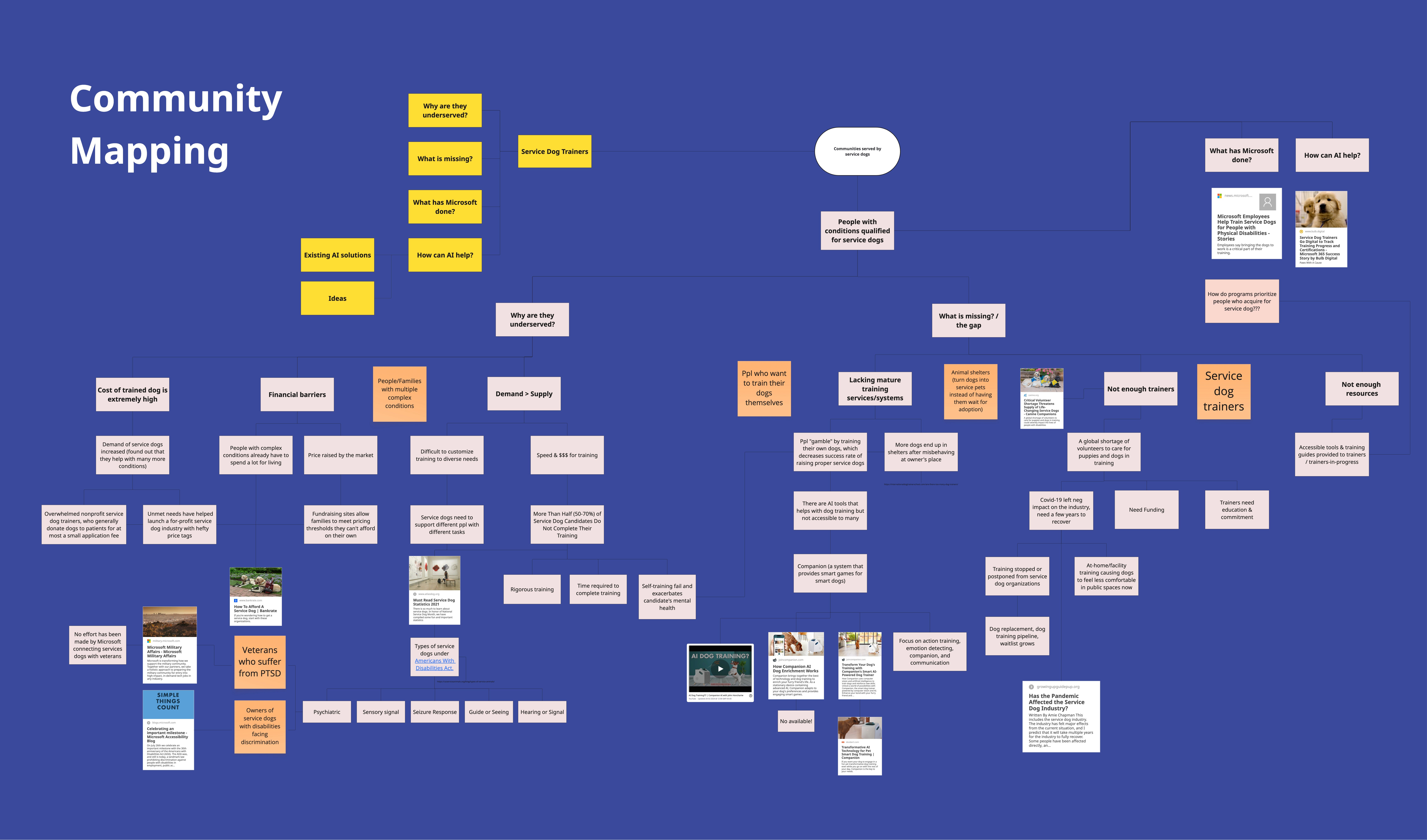
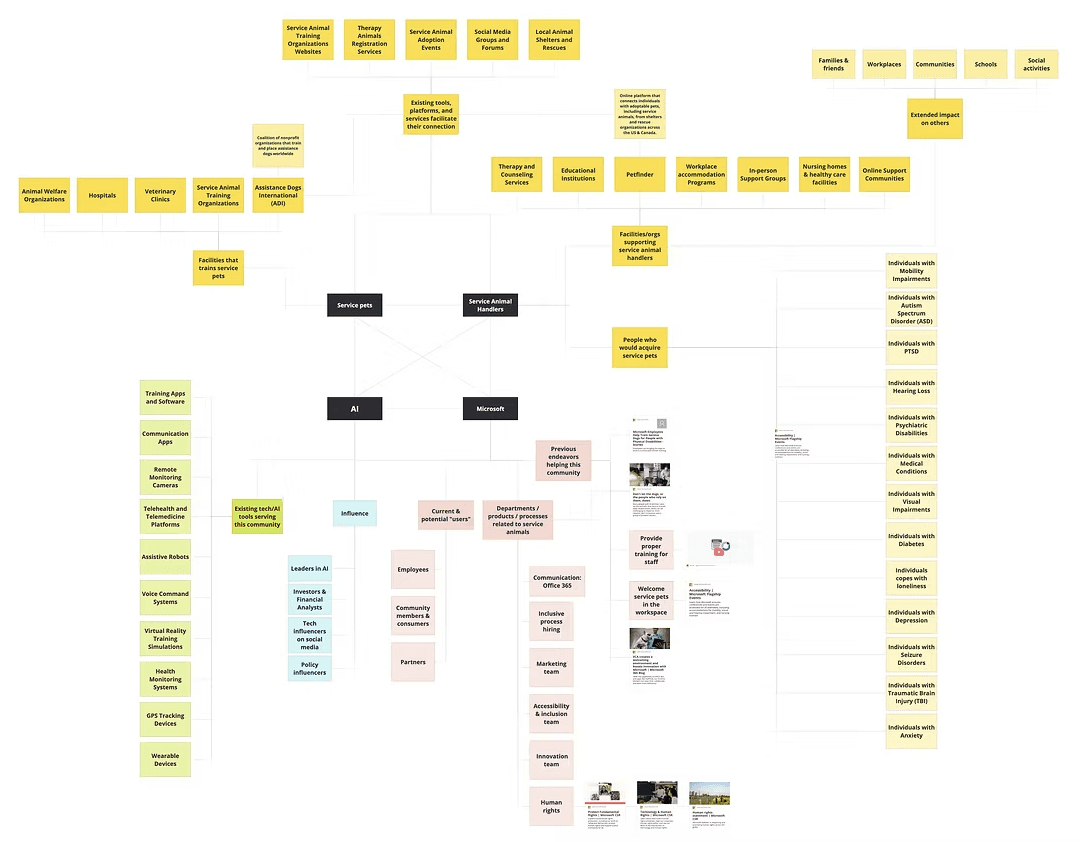
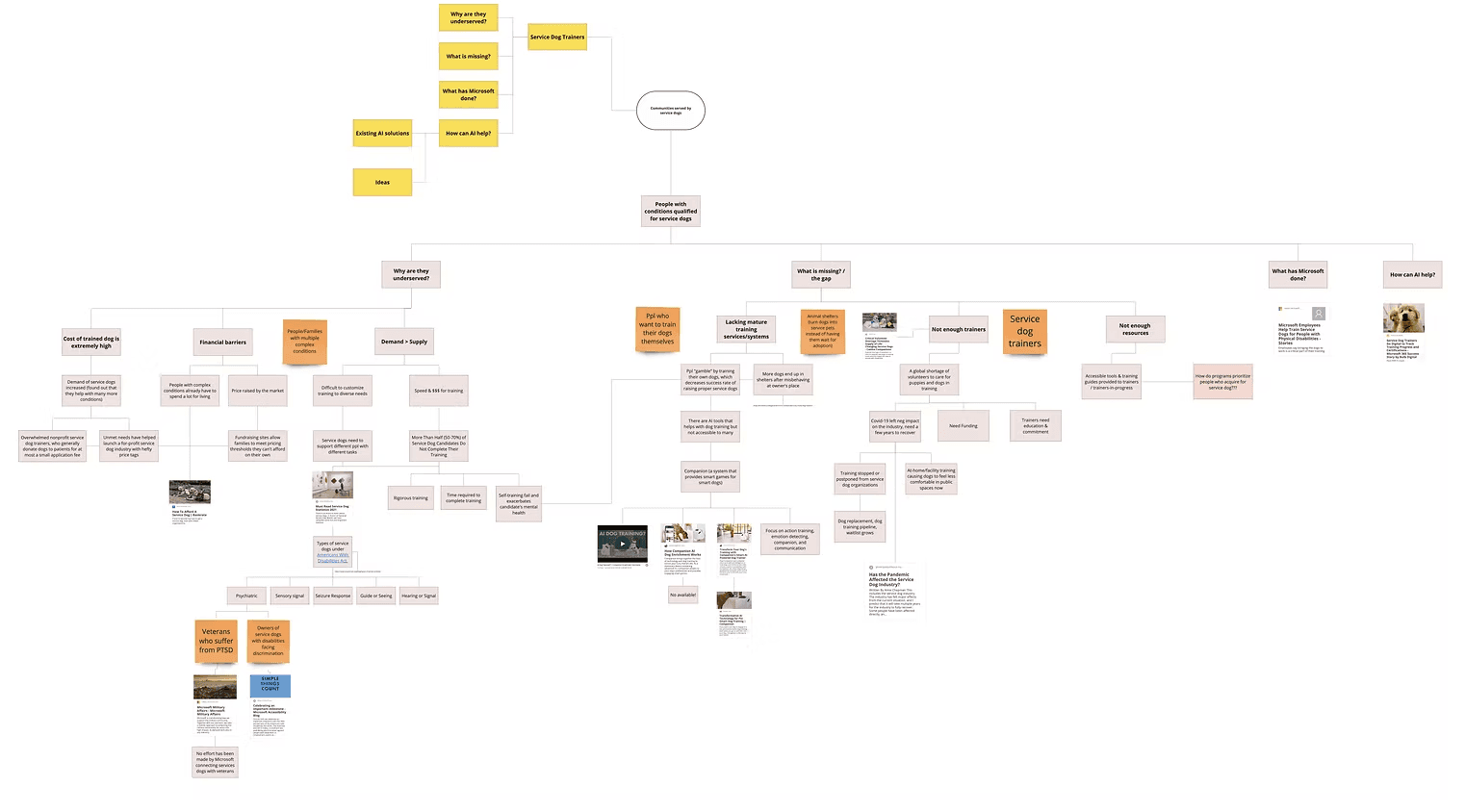
The project opened with desk research and the creation of an ecosystem map. This revealed the multiple stakeholders from trainers and handlers to organizations and eventual service dog users and the fragmented way training knowledge and routines were shared between them.
Primary Research
Ecosystem Mapping
Understanding the Business Perspective
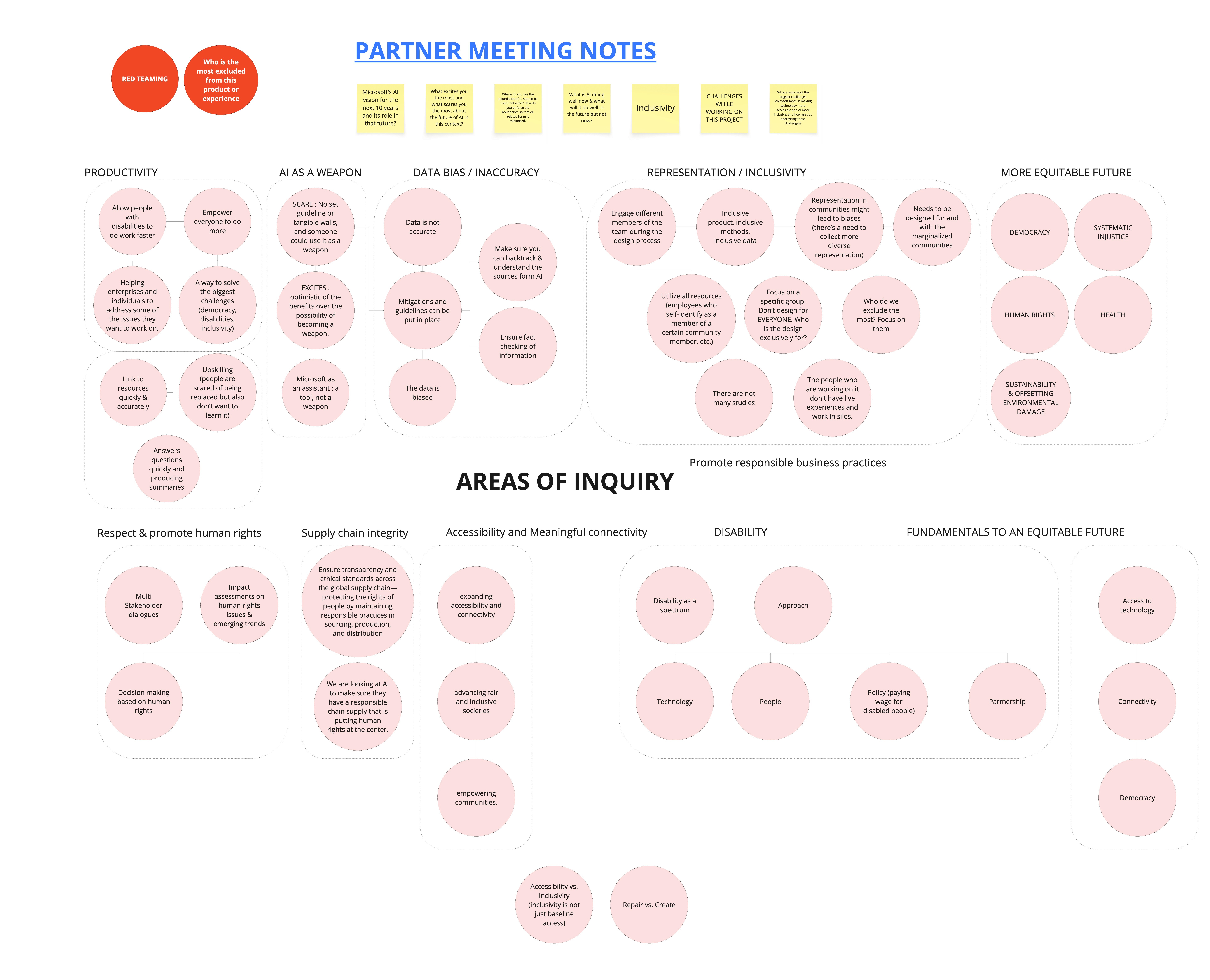
Situating the Community in Context
Interview Guide
Insight Generation
Converging on the Problem
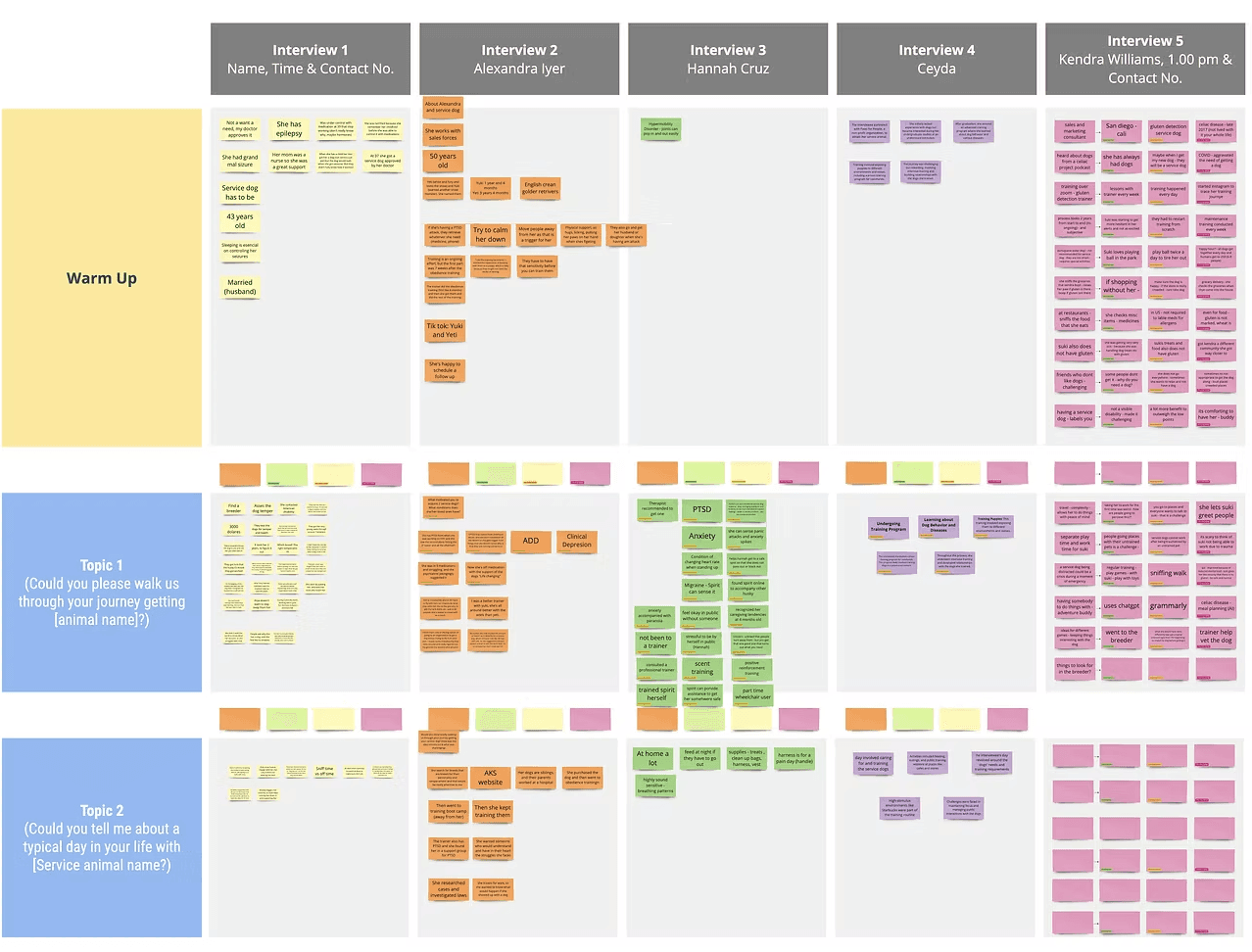
To ground the work, we developed an interview guide and conducted sessions with handlers and trainers. These conversations uncovered the day-to-day realities of training: inconsistent practices, communication gaps between stakeholders, and the difficulty of tracking progress across long training
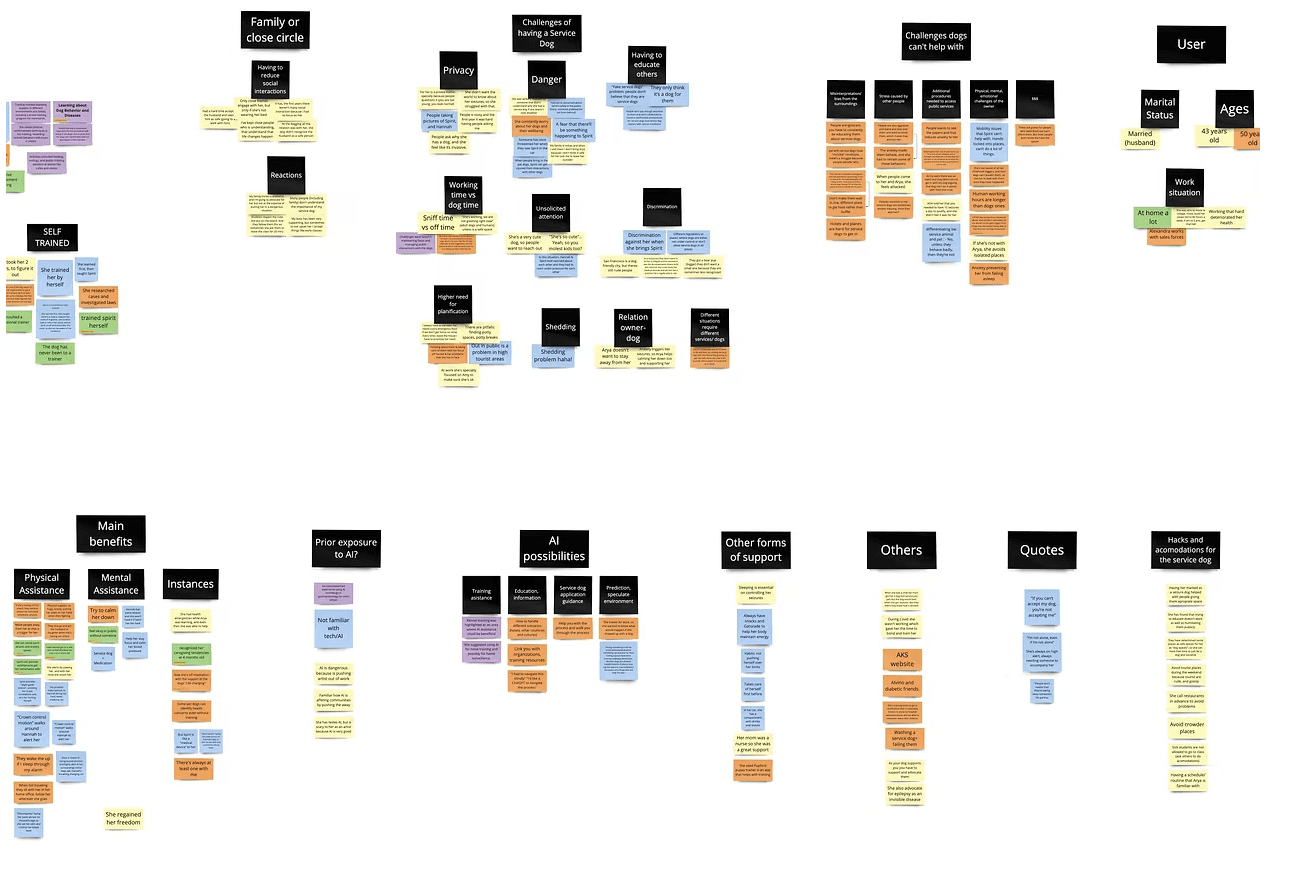
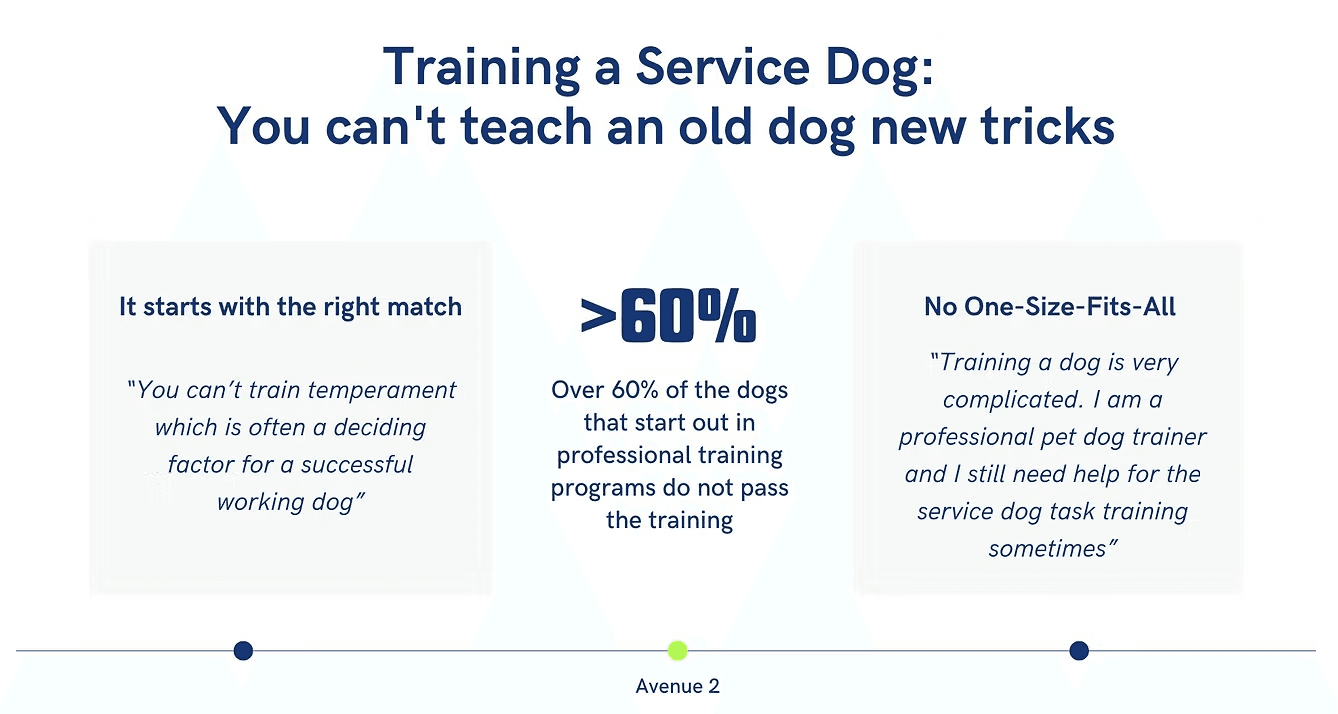
Training service dogs is complex, costly, and inconsistent — no single method works for all dogs or handlers. Research highlighted training as one of the most demanding parts of the ecosystem, signaling a clear opportunity for design intervention.
Ideation & Co-Design

Ethical Design
Human-Centered
Invisible UX
Barrier-Free Access
Ensure the solution does
not cause harm to the service dog
or the people around it
Prioritize input from the service dog
community to create an inclusive
and informed design
Design a solution that is minimally
intrusive and fits naturally into users' lives
Address key challenges in accessing
a well-trained service dog, whether in cost,
time, effort, or resources
We facilitated a series of co-design sessions, empowering the service dog community to collaboratively generate potential interventions. These sessions were guided by insights from our research, ensuring that the ideas addressed real challenges and needs.
We used design principles as our north star, refining our concept to create a meaningful and impactful solution
Co-Design session with Owners
Intervention
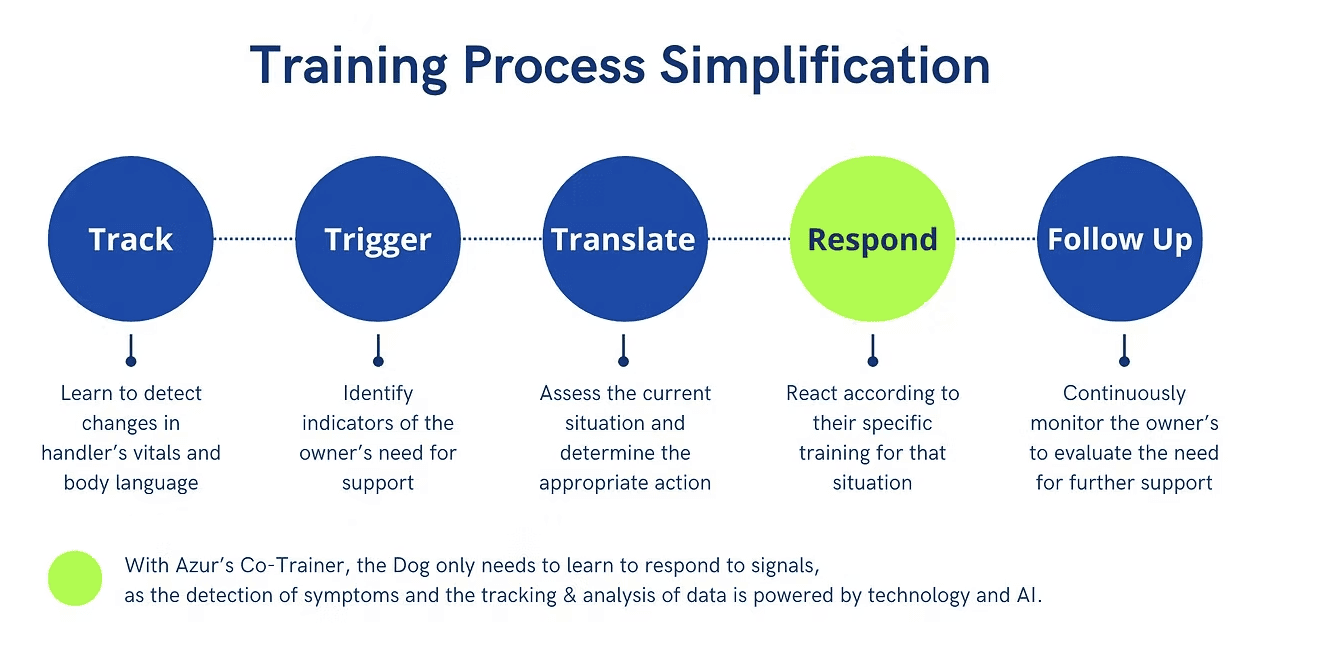
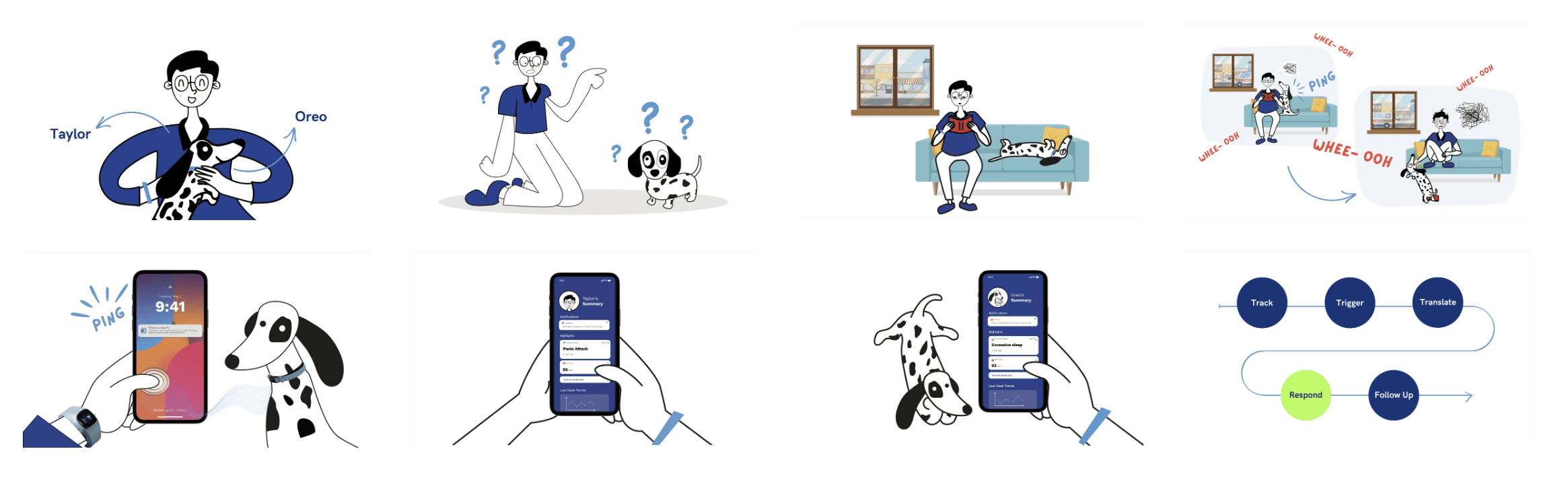
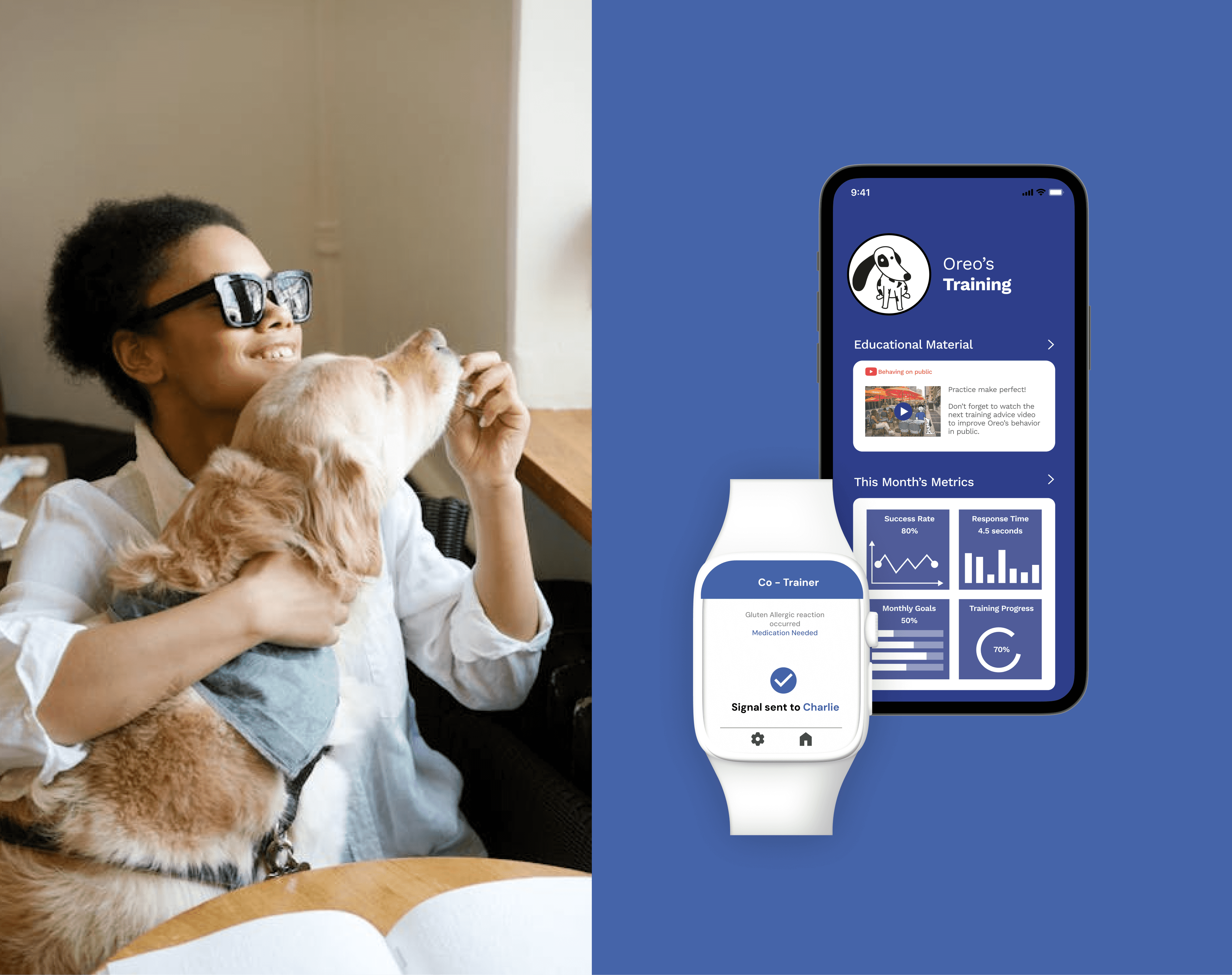
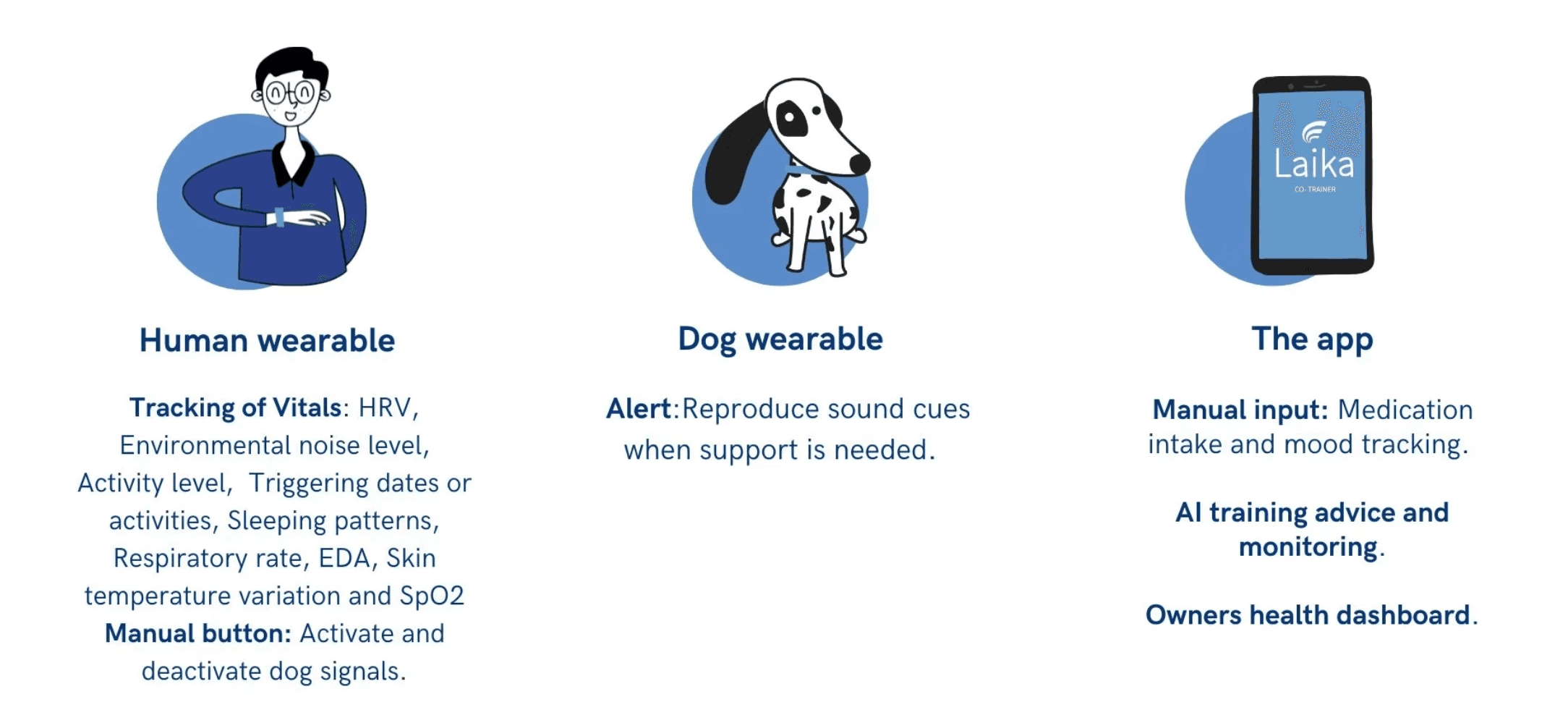
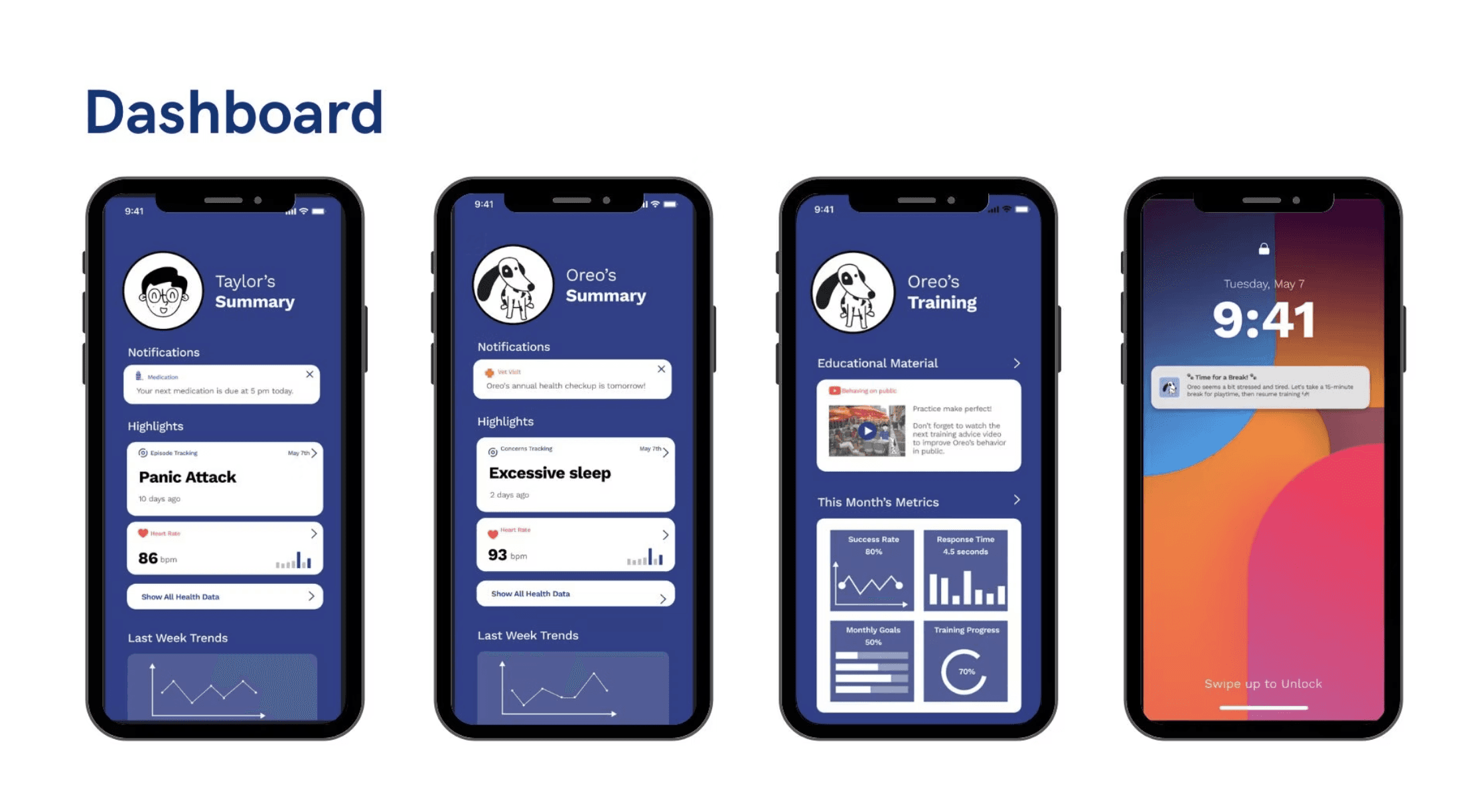
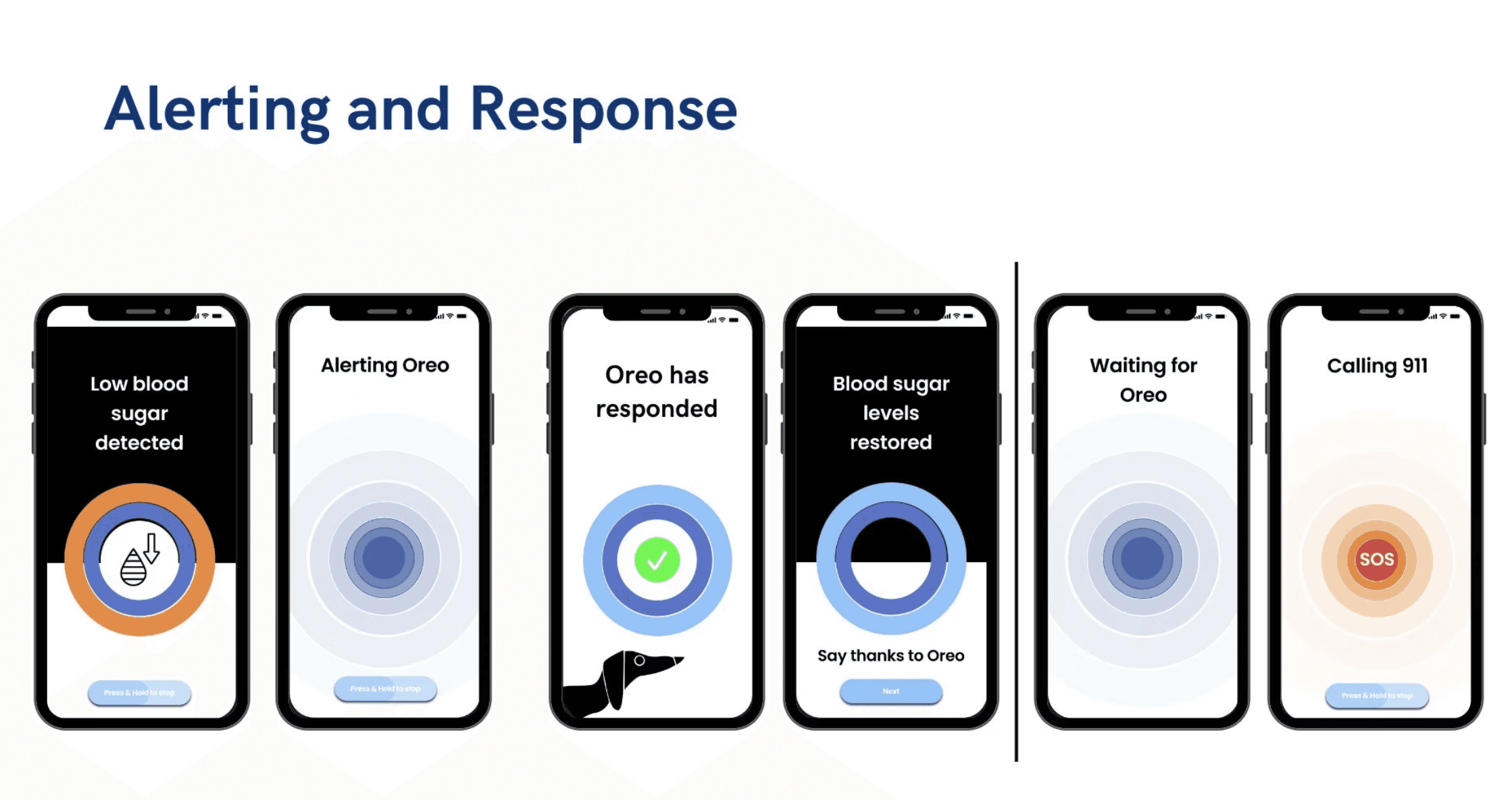
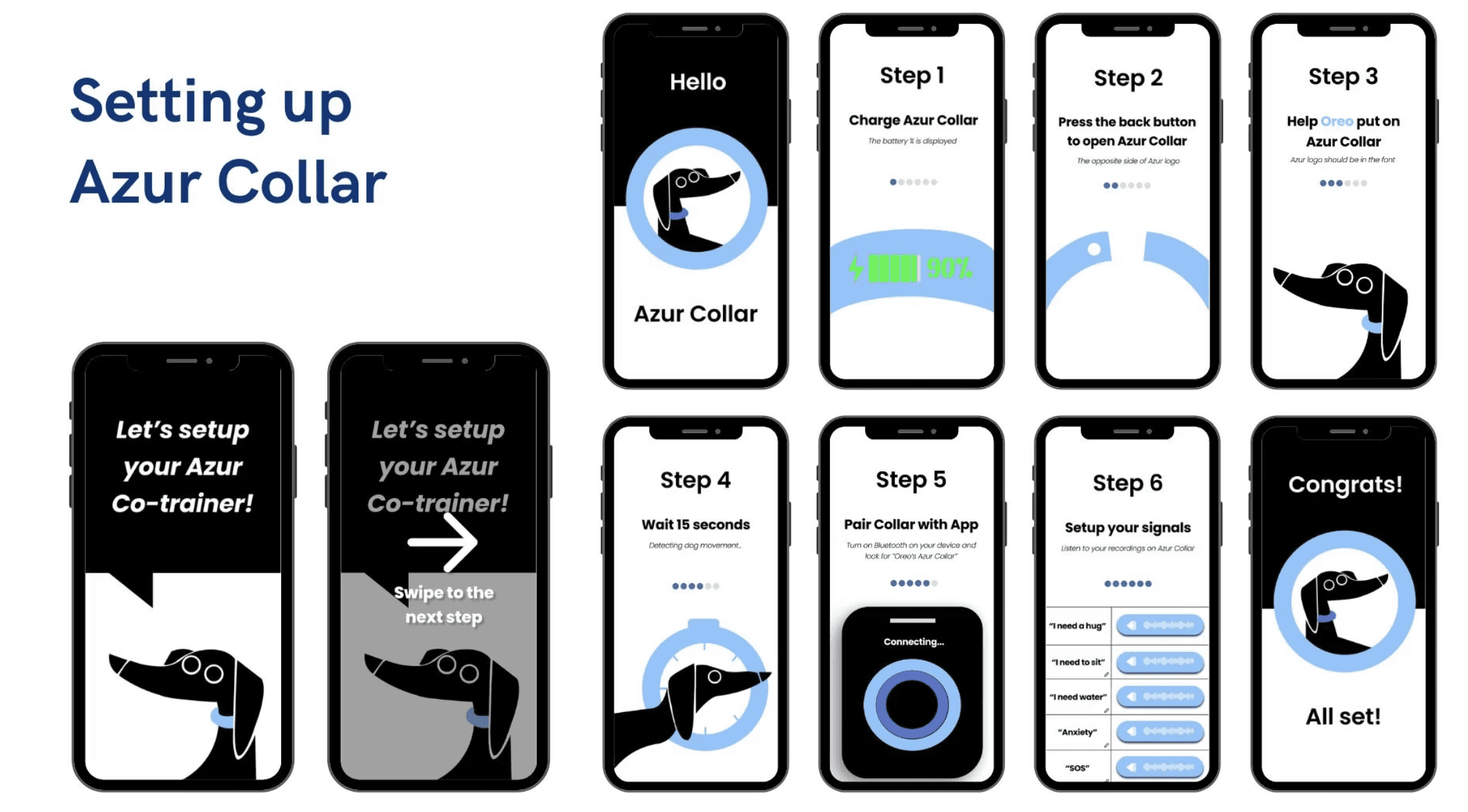
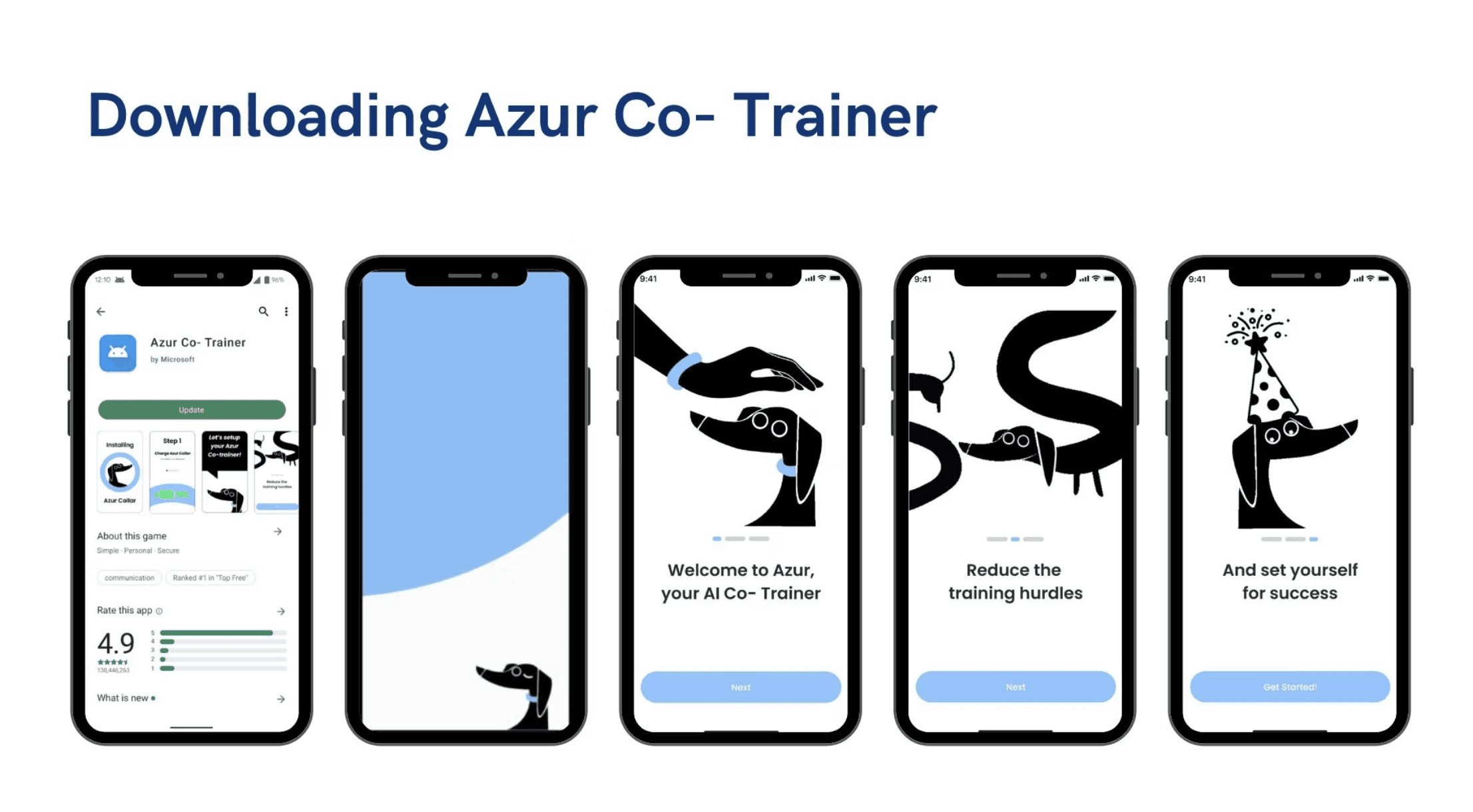
Laika Co-Trainer leverages AI and wearable technology to streamline service dog training, enhancing success rates and reducing stress for owners. By translating human vital signs into sensory signals for dogs, Laika strengthens the human-dog bond, improves communication, and fosters greater independence for individuals with disabilities.
Digital Interface Prototyping
Laika Co-Trainer leverages AI and wearable technology to streamline service dog training, enhancing success rates and reducing stress for owners. By translating human vital signs into sensory signals for dogs, Laika strengthens the human-dog bond, improves communication, and fosters greater independence for individuals with disabilities.
Healthcare

App Interface
MVP Features
Technical Considerations
Learnings & Reflections