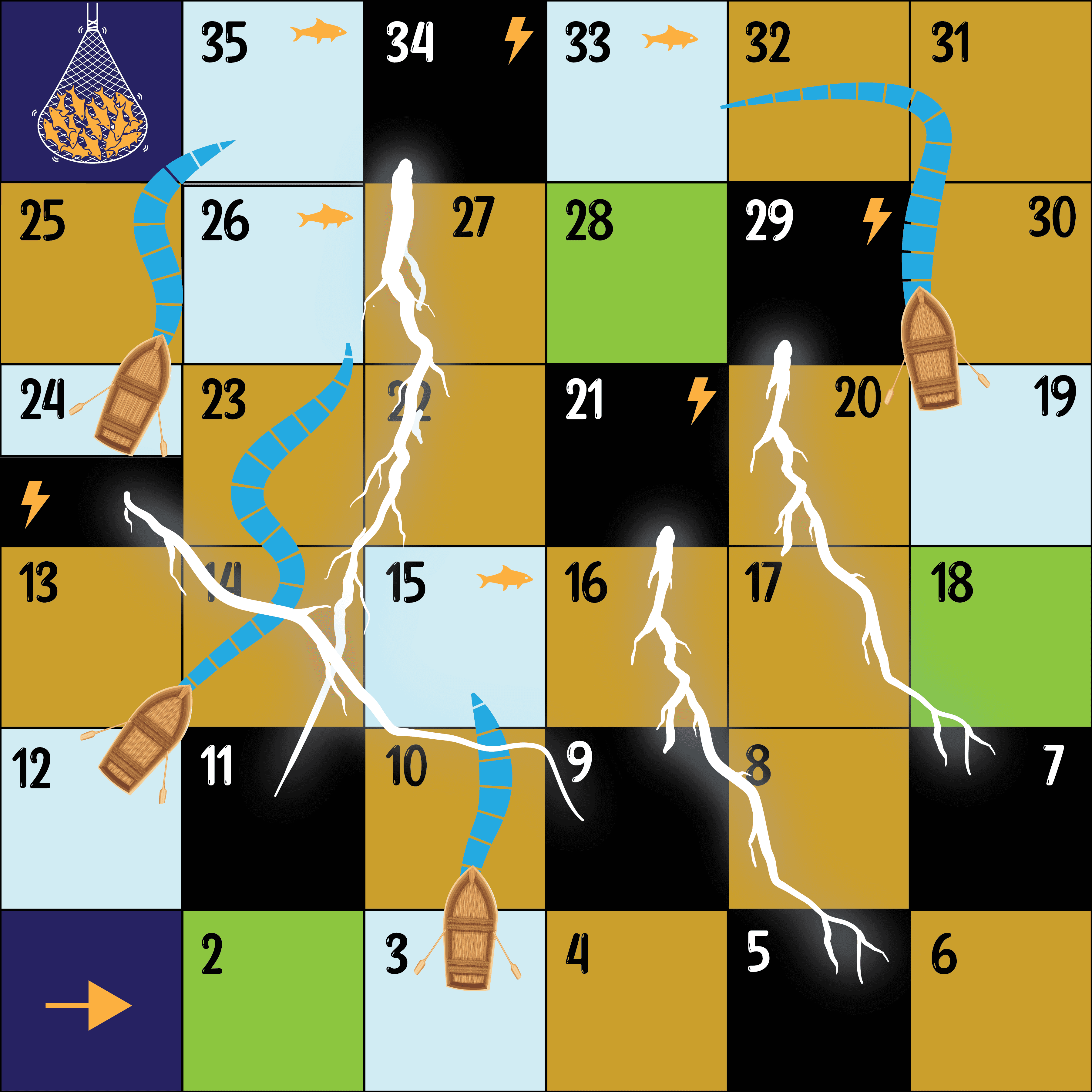
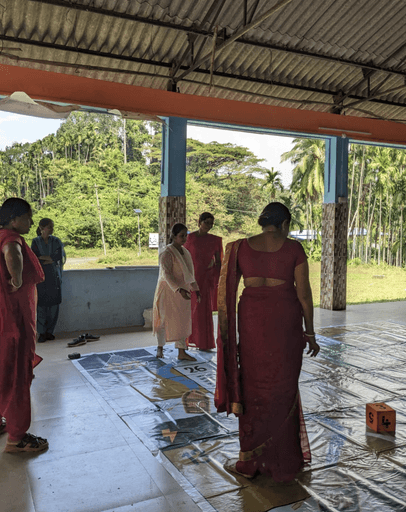
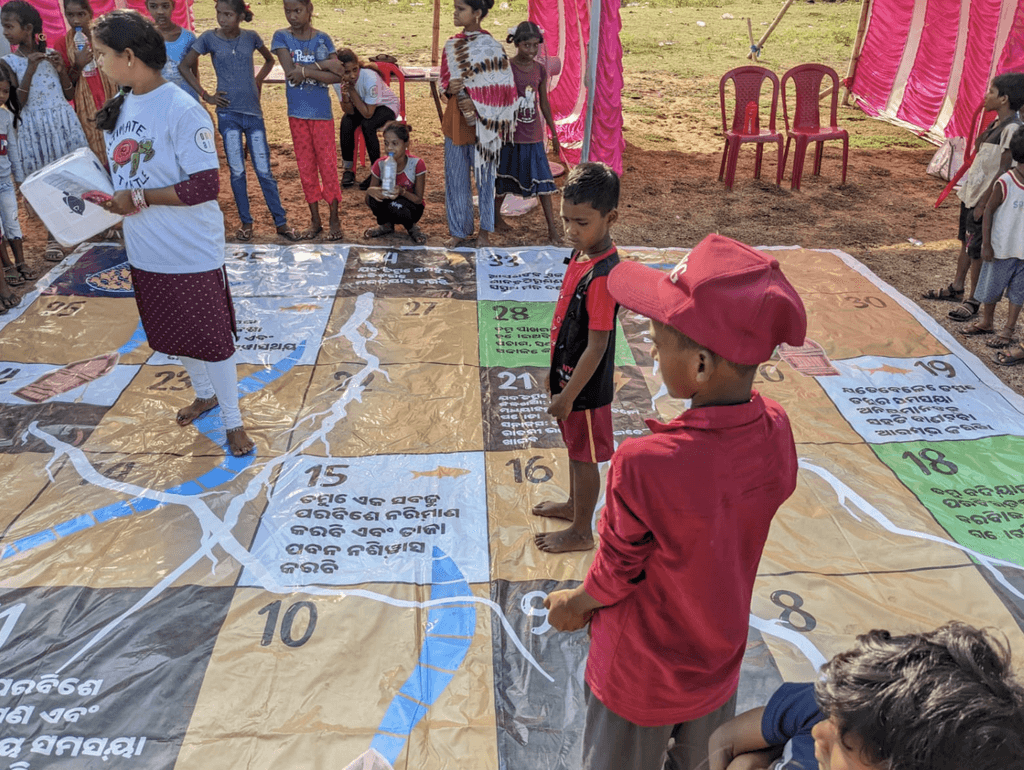
"Boats & Bolts," a life-size board game, creatively addressed the challenge of low sports participation in Ganjam by integrating health and well-being awareness. It resulted in a notable 32% increase in participation compared to previous initiatives. Additionally, the game complemented the ongoing Ultimate Frisbee program, further enriching sports engagement.
Project Responsibilities:
Conceptualization & Development: Leading the conceptualization and development of "Boats & Nets" to align with community needs, while also supporting the continuation of Ultimate Frisbee.
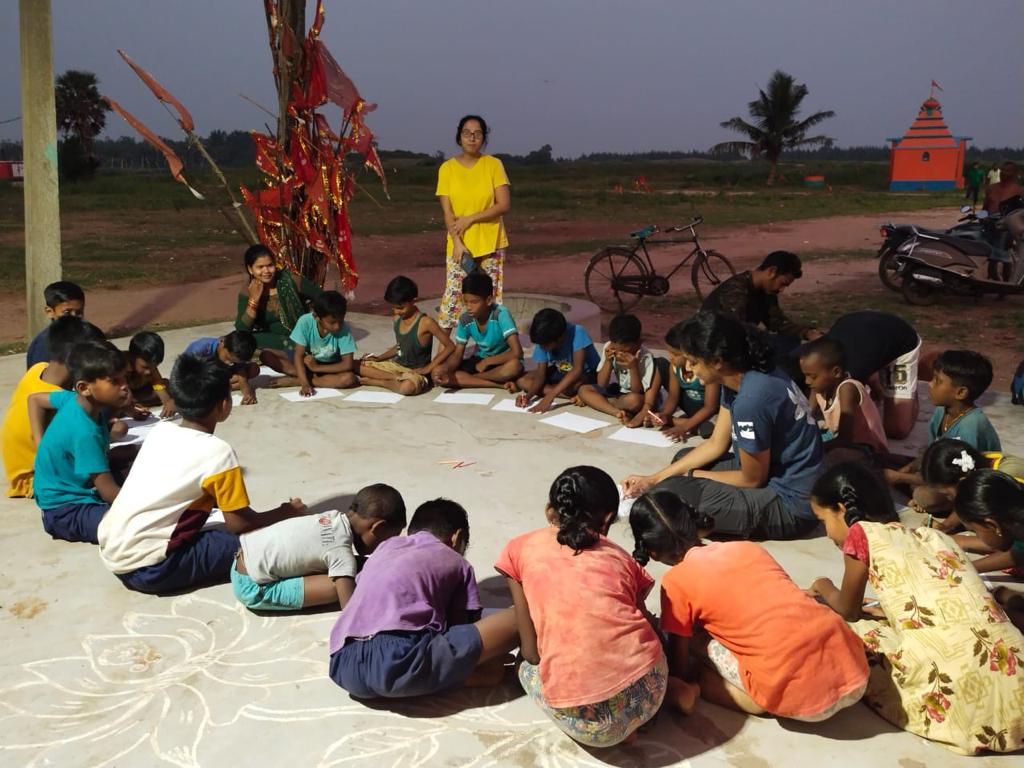
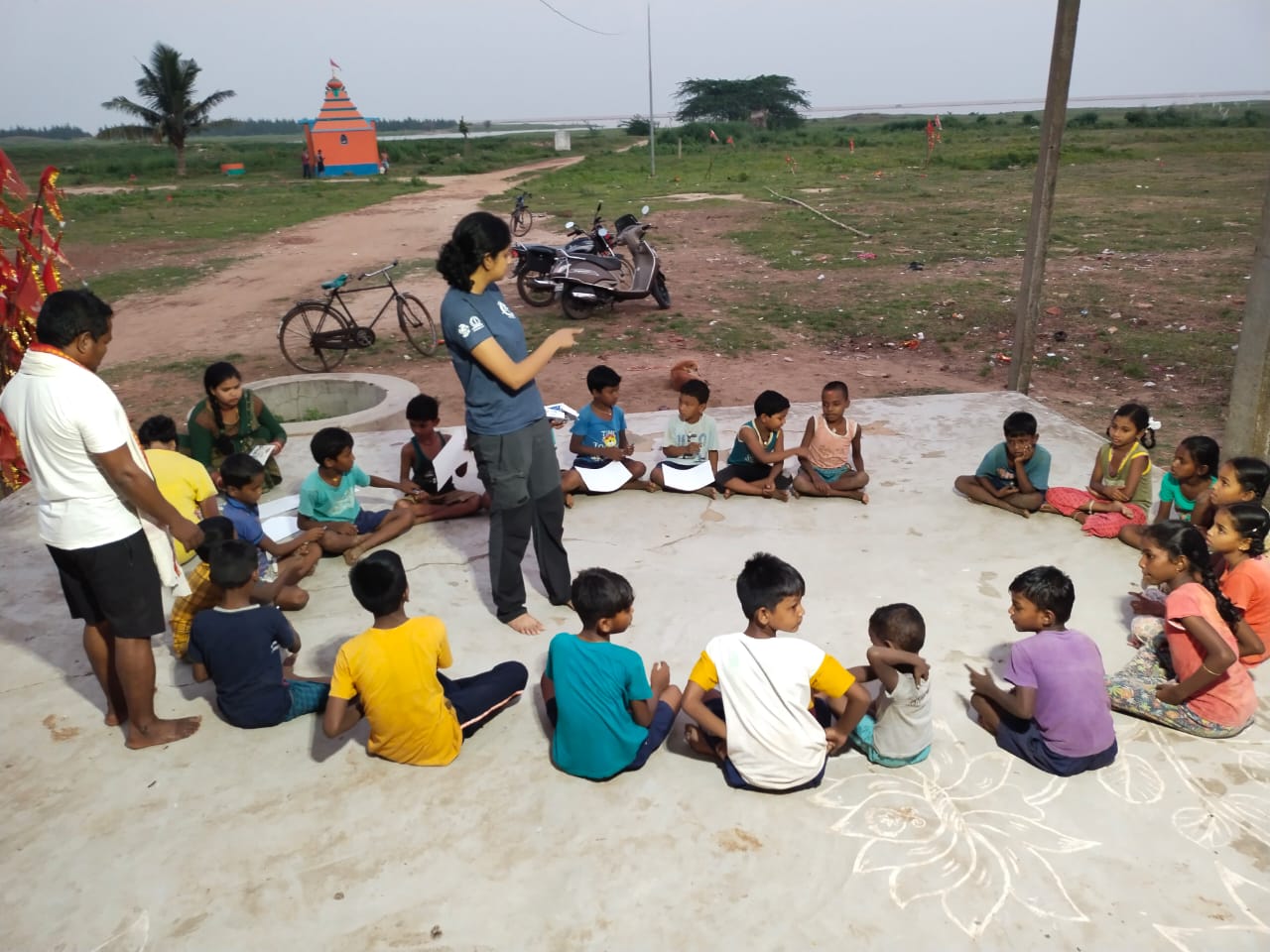
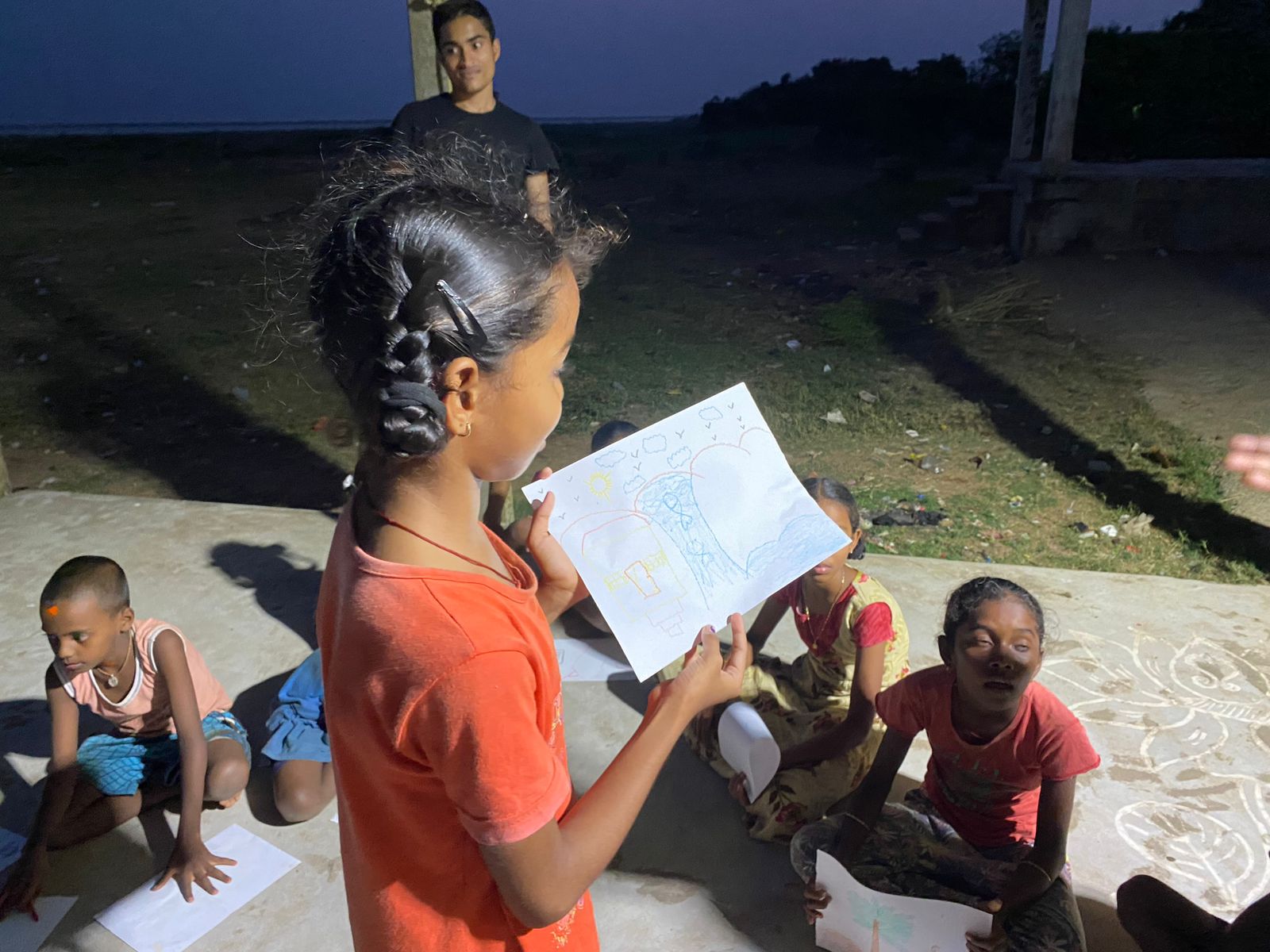
User Research: Conducted 4 focus groups with the children aged 8-14 y/o to derive insights.
User Testing: Conducting comprehensive user testing to refine game mechanics and enhance user experience, ensuring seamless integration with existing sports activities.
Logistical Coordination: Orchestrating logistical aspects of both Ultimate Frisbee and "Boats & Nets" initiatives to ensure effective execution and community engagement.
How Might We
utilize gamification to promote health and well-being, engaging our target audience and fostering sustainable habits for a healthier community?
Final Output:
Impact:
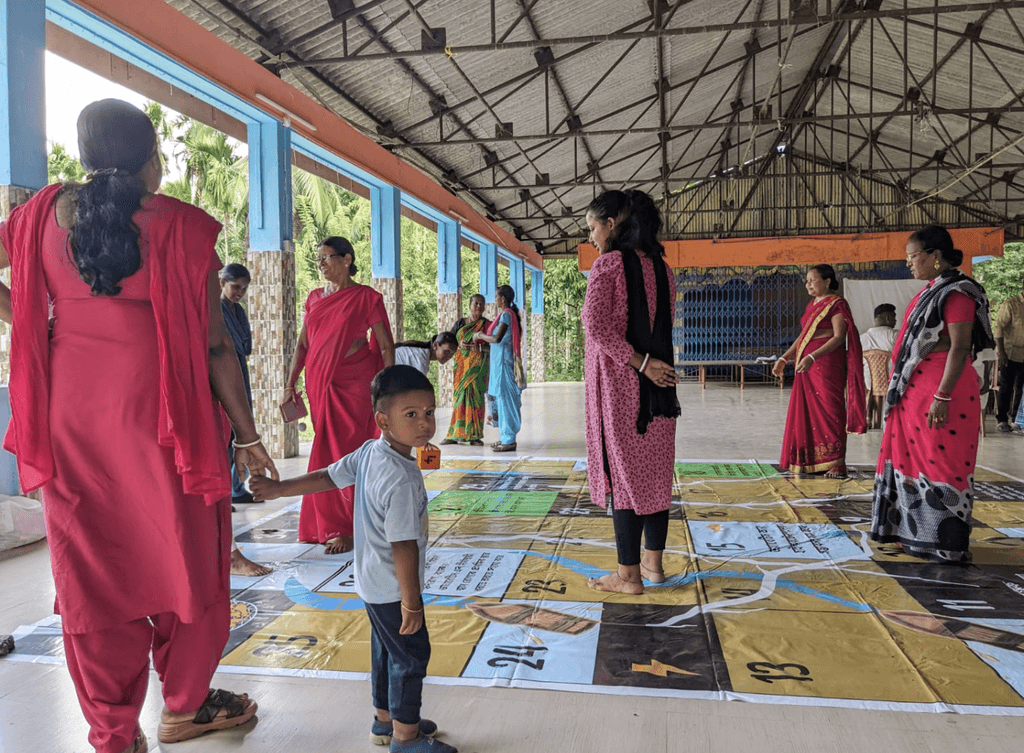
The game was tested at an annual village event, resulting in a 32% increase in participation on Day 2 compared to the previous year, highlighting the game's effectiveness in engaging the community
Solution Summary:
Duration:
Need for Intervention:
The project spanned from October 2022 - April 2023 (8 months), from initial ideation to implementation and evaluation, running concurrently with the ongoing Ultimate Frisbee program
Recognizing the potential to enhance sports engagement and health awareness among Ganjam's youth, "Boats & Nets" was developed as a proactive measure to provide additional opportunities for participation and well-being promotion.
Pain Points:
Initial enthusiasm wanes with monotony
Lack of direct health habit teachings.
Spirit circle participation lacks attentiveness.
Lack of continuity due to changing seasons diminishes interest
Separate training needed for girls and boys.
Language poses significant communication barrier.
Personal Learnings & Reflections:
Working with users in their environment gives better results.
This project taught me how designing for complexity comes with its own set of subtleties and interconnectivity because it was a fairly new area of intervention
It forced me to conduct research while on the go, work through never-ending obstacle courses of complex problems in developmental projects, and think both big and microscopic at once
The project underscored the importance of co-creation and feedback loops in empowering stakeholders and driving meaningful change, emphasizing the value of designing with, rather than for, communities.
Next Steps:
The game has been translated into 2 languages - Bengali and Telugu, broadening accessibility and catering to a wider audience
Translation efforts are underway for two additional coastal languages, further expanding the reach and impact of the game beyond its initial scope.
Co- Creation:
Collaborating with children and local representatives ensured that the game was created for the community, with the community, fostering a sense of ownership and connection.
Testing the game twice with the co-creation group and once with a fresh set of users provided comprehensive feedback loops, allowing for refinement and validation of design decisions to enhance user experience and effectiveness.
Insights:
Involving children and local representatives in the design process allowed for valuable input on visual aspects and game changes, ensuring cultural relevance and community ownership.
Co-creation sessions facilitated a deeper understanding of community needs and preferences, guiding the development of a game tailored to the specific context of Ganjam.
Context:
Dakshin, a nonprofit organization, runs both a health and a sports program in Ganjam. While Ultimate Frisbee successfully kept the community engaged in active well-being, the health program struggled to create the desired impact. Additionally, during the extreme monsoon months (May–July), outdoor sports participation dropped, creating a disconnect between the children and the program.
To address this, we conducted focus groups and user research, which revealed that modifying familiar games was more effective than introducing entirely new ones. This led to the creation of "Boats & Bolts," a life-size board game inspired by snakes & ladders. The game served as an indoor alternative during the monsoon, ensuring continued community engagement while seamlessly integrating health awareness into play. Ultimately, it strengthened the impact of both the health and sports programs, bridging the seasonal gap and maintaining Dakshin’s connection with the community.
Experience Design Assistant at Dakshin Foundation