Role
Tools
Methodologies
Company
UX Design, Motion Design, UI
Ecosystem Mapping, Insight Generation, Journey Mapping
Landscape Analysis, Qualitative and Quantitative Research,
Persona Development, Prototyping, Accessibility Design
Figma, Miro, After Effects, Illustrator
Microsoft
Brief
How might AI help protect the fundamental rights of service dog owners
Duration
15 Weeks
Tasks
Duration
"
"
The Problem
Service dogs are a high-risk medical equipment and investment. As of 2021, there are 61 million
people in the US living with disabilities that could benefit from a service dog, yet less than 1% of
them are teamed with service dogs.
More than 60% of the dogs that start out in professional training programs do not pass,
resulting in them being washed out.
The Solution
Challenge
Training process is highly subjective, complex & expensive
I was in a situation where I cannot get a dog that fails (training) because
I do not have enough money to keep 2 cats and 5 dogs, I just can't do that."
-Amy, Service Dog Owner
"I am finding it harder and harder to keep track of everything I need to track of.
Figuring out which doctors need to be made aware of what symptoms & even
remembering all the doctors I see is getting harder"
-X, Service Dog Owner
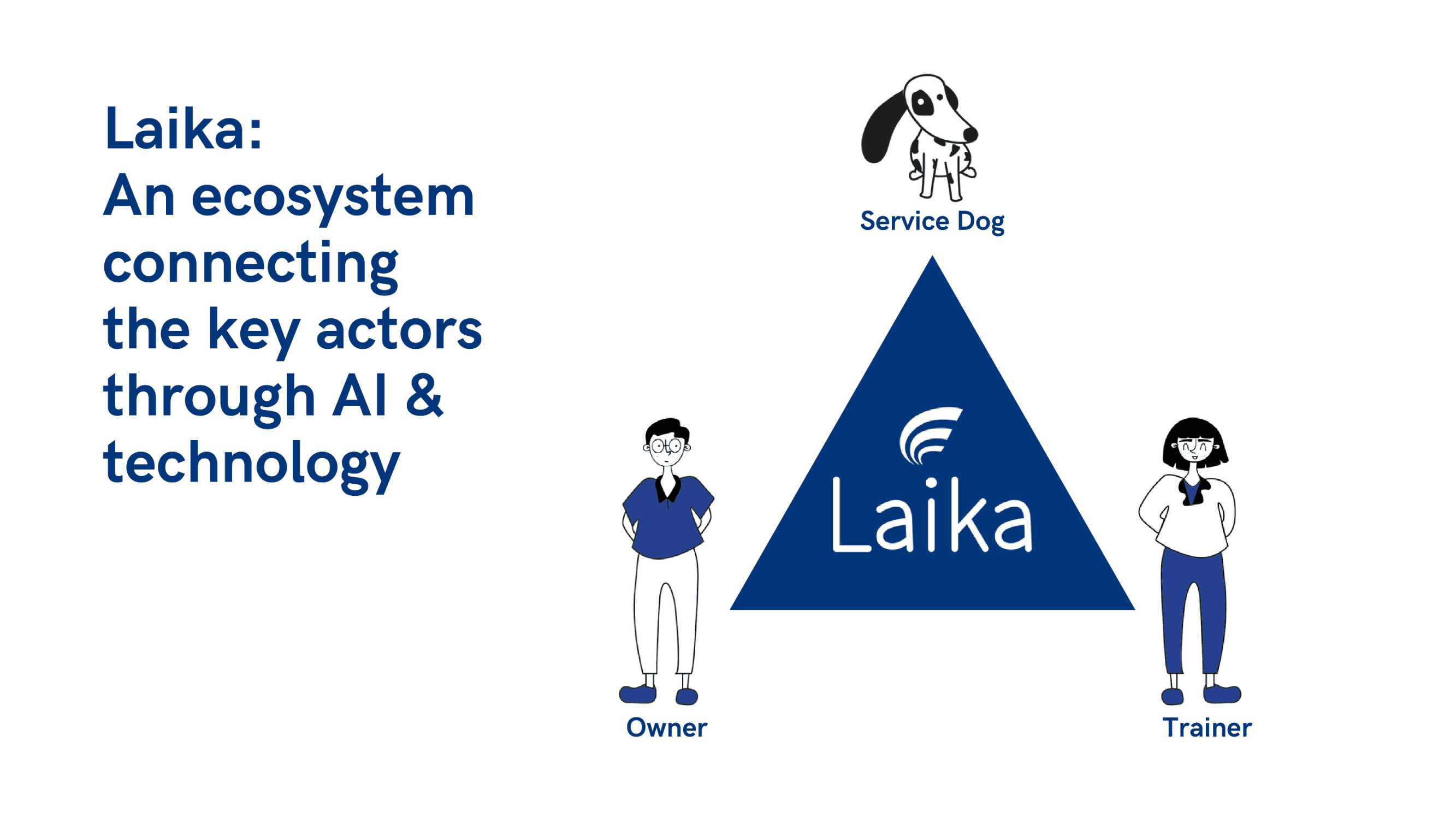
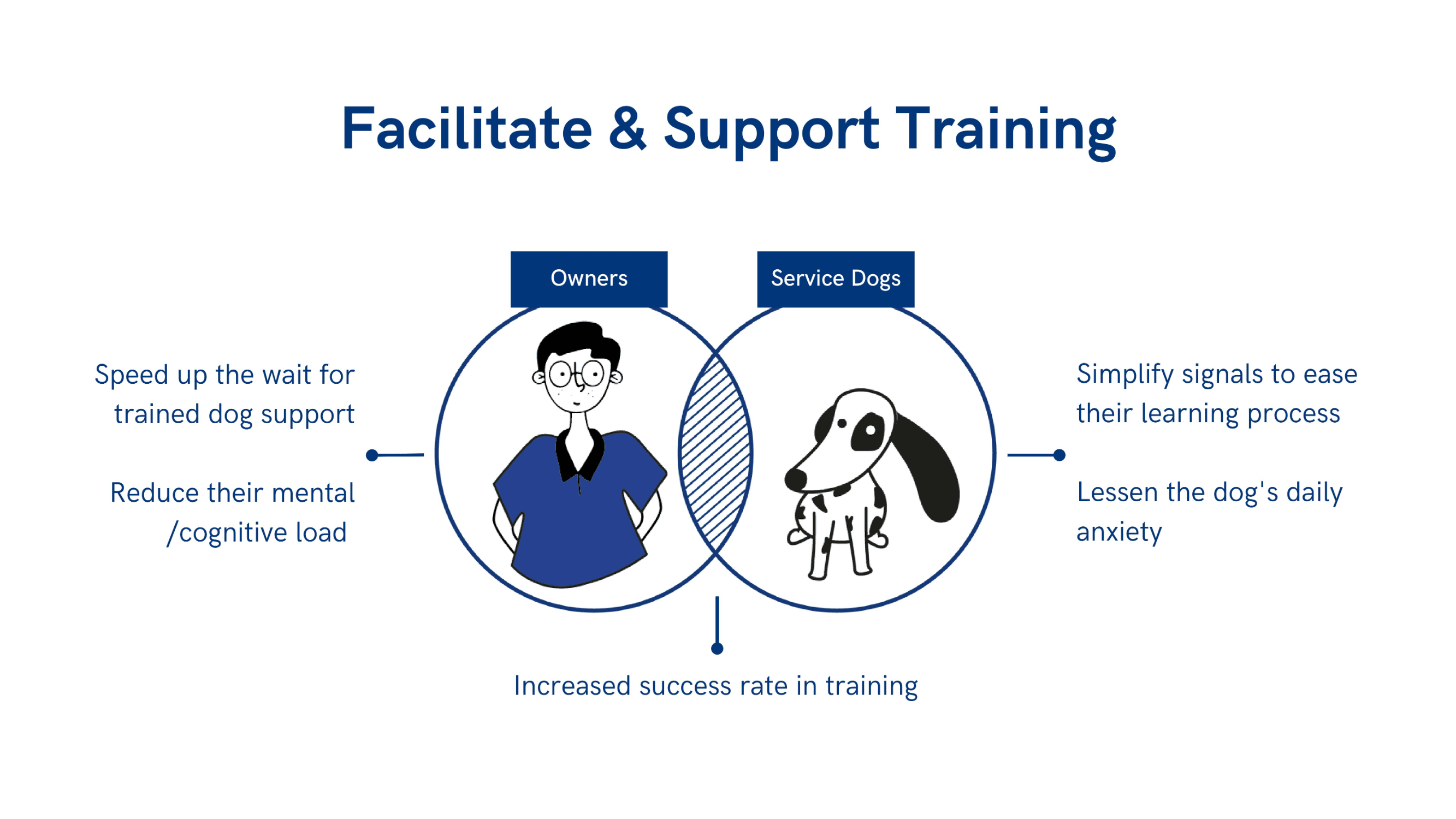
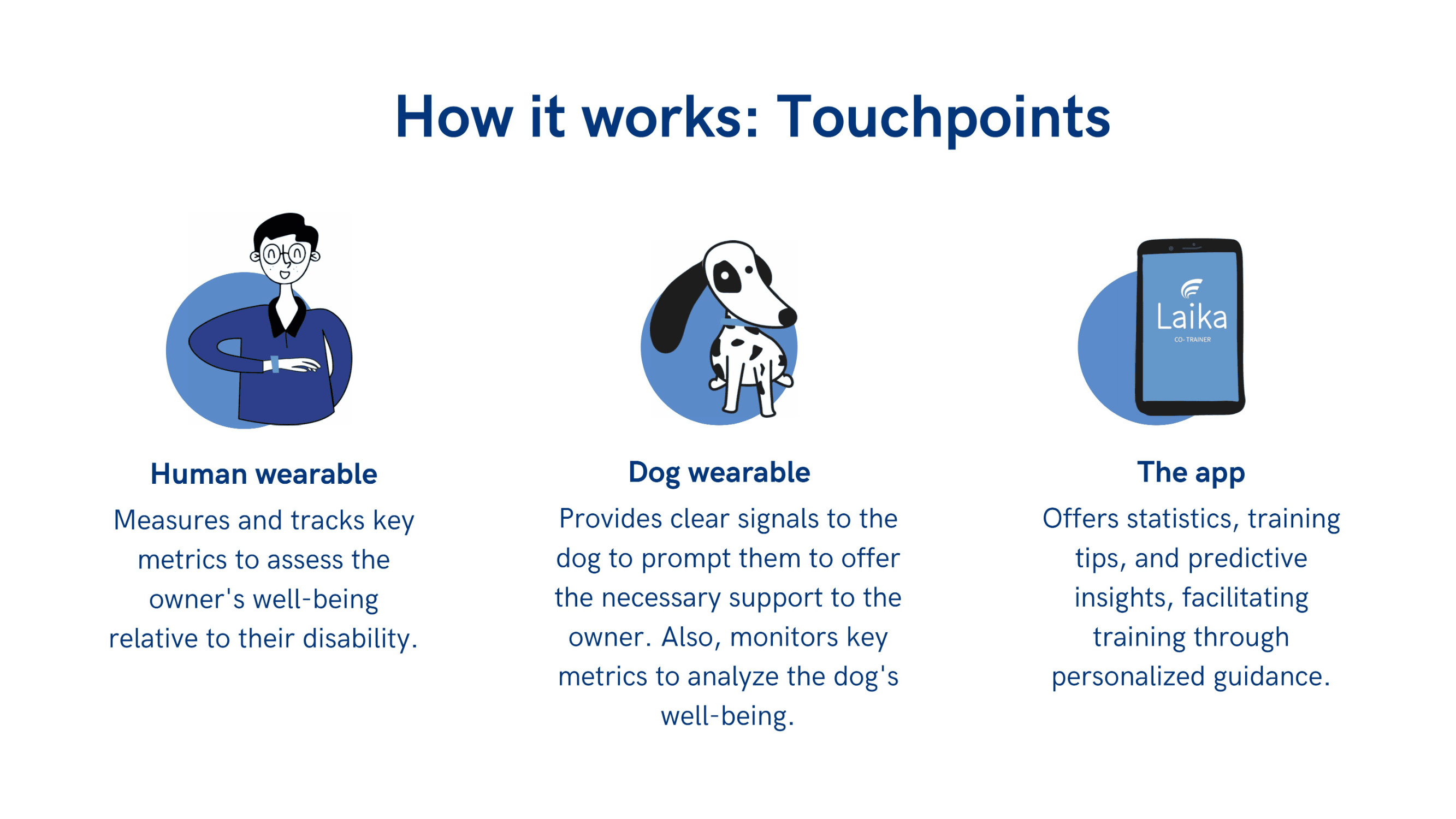
Laika a Co-Trainer leveraging Artificial Intelligence that streamlines the training process, reducing
complexity and improving success rates. By optimizing training steps and providing real-time guidance,
this solution increases accessibility to service dogs while lowering the risk of failure—empowering
both trainers and individuals who depend on these adorable companions.
Process
t
Intent Coversation
Brief Exploration
Partner management
Team Building
Project Planning
Problem Definiton
Opportunity Framing
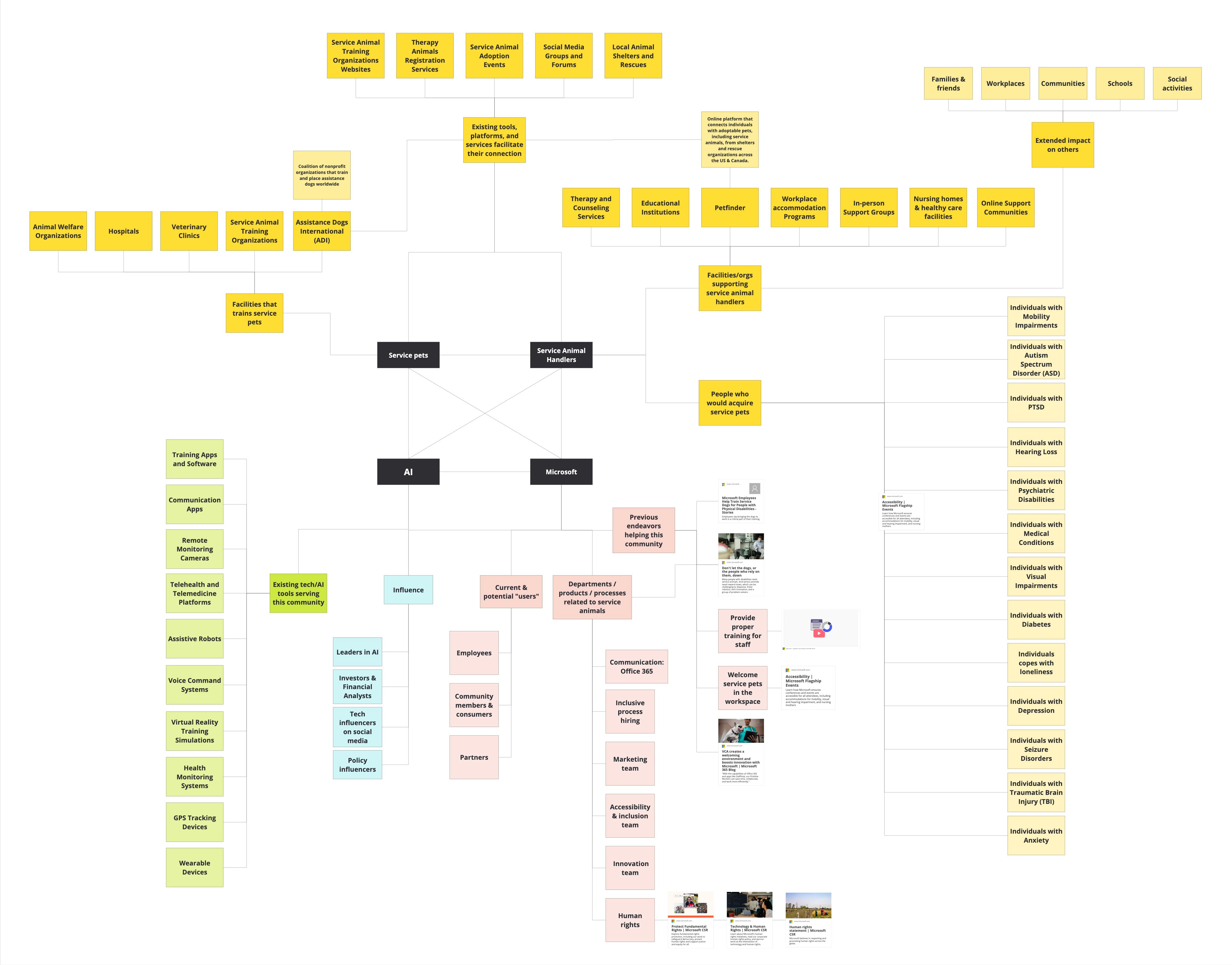
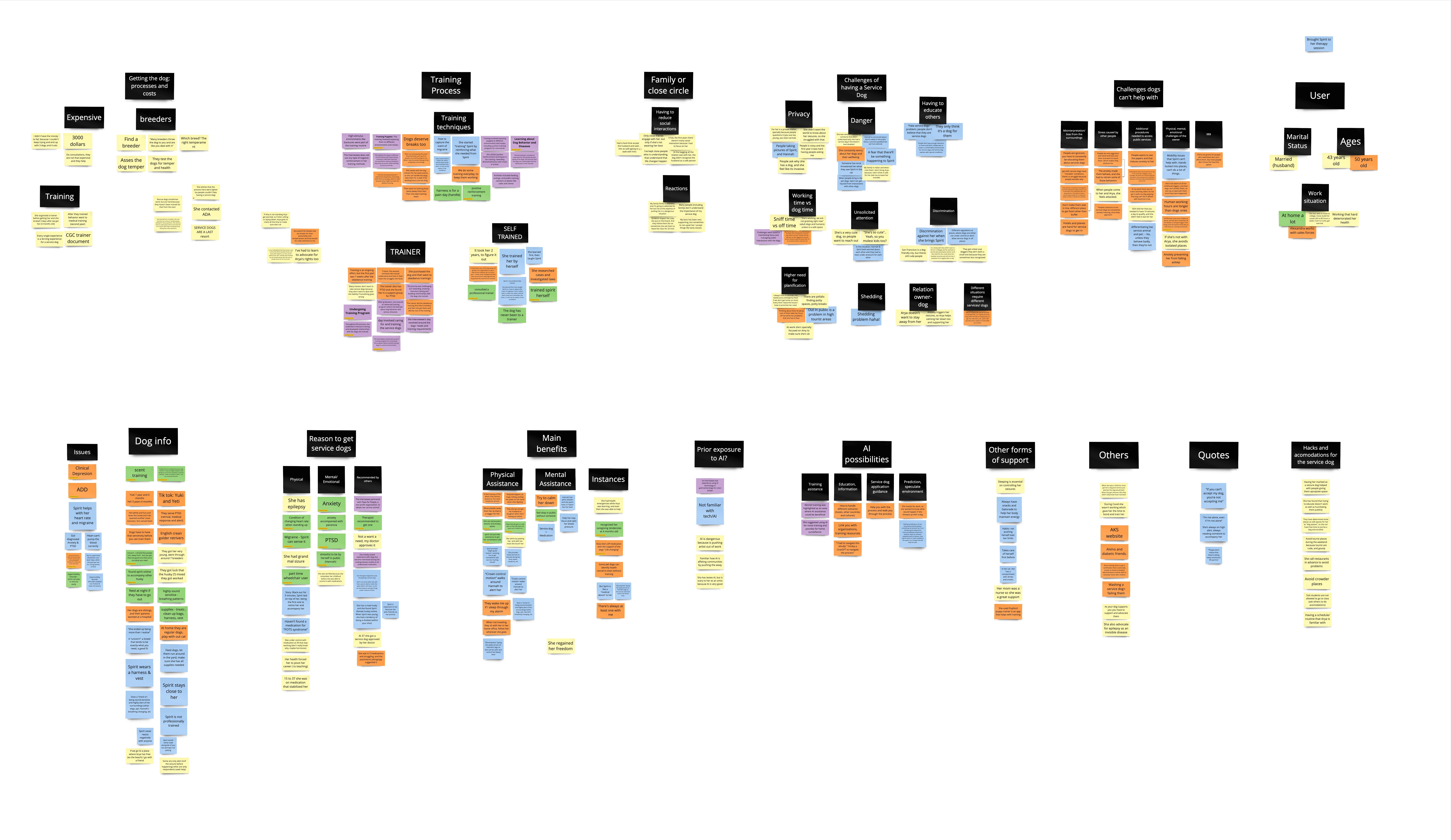
Insight Generation
Generative Research
Ideation
Idea Development
Idea Selection
Concept Co-Development
Concept selection
Concept Prototyping
Evaluative research
Prototype Refinement
Solution implementation
Narrative Development
Narrative refinement
Partner Pitch and Feedback
Phase
Discovery
and scoping
Service Dog Exploration
& Ideation
User flows
& wireframing
Partner pitch &
Feedback
Week 1 - 2
Week 3 - 7
Week 8 - 13
Week 14 - 15
Intent Conversation
Where are we now?
Why does this challenge
matter now?
What are the drivers?
Where do we want to be?
What does success look like?
How do we expect to get there?
Who do we need to engage to
understand the problem?
What are the next steps to be
organised to complete this in
next 15 weeks?
Uncovering problems
through stakeholder interviews
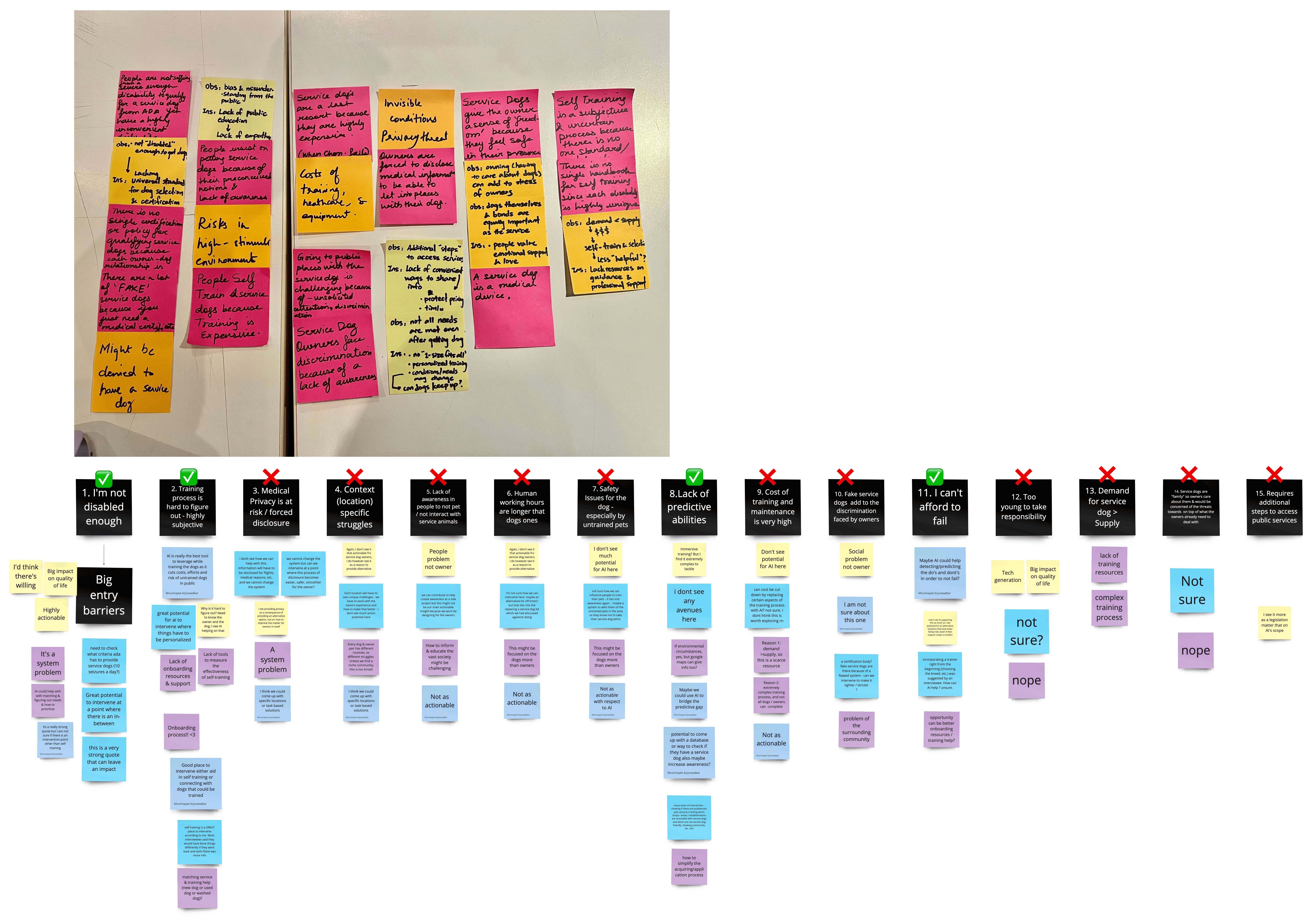
Insight Generation
Idea Selection

Ethical Design
Human-Centered
Invisible UX
Barrier-Free Access
Ensure the solution does
not cause harm to the service dog
or the people around it
Prioritize input from the service dog
community to create an inclusive
and informed design
Design a solution that is minimally
intrusive and fits naturally into users' lives
Address key challenges in accessing
a well-trained service dog, whether in cost,
time, effort, or resources
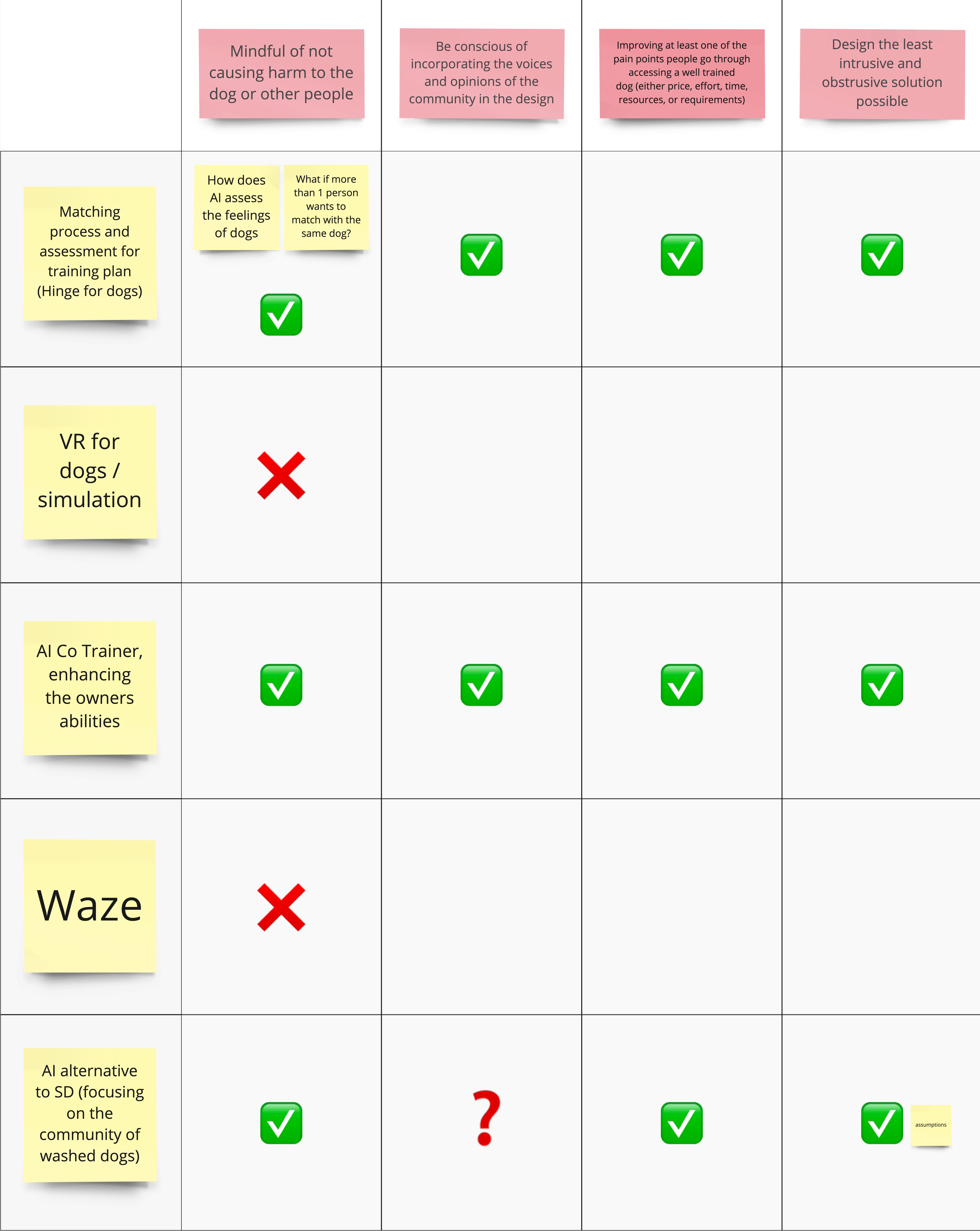
Guiding Design Principles
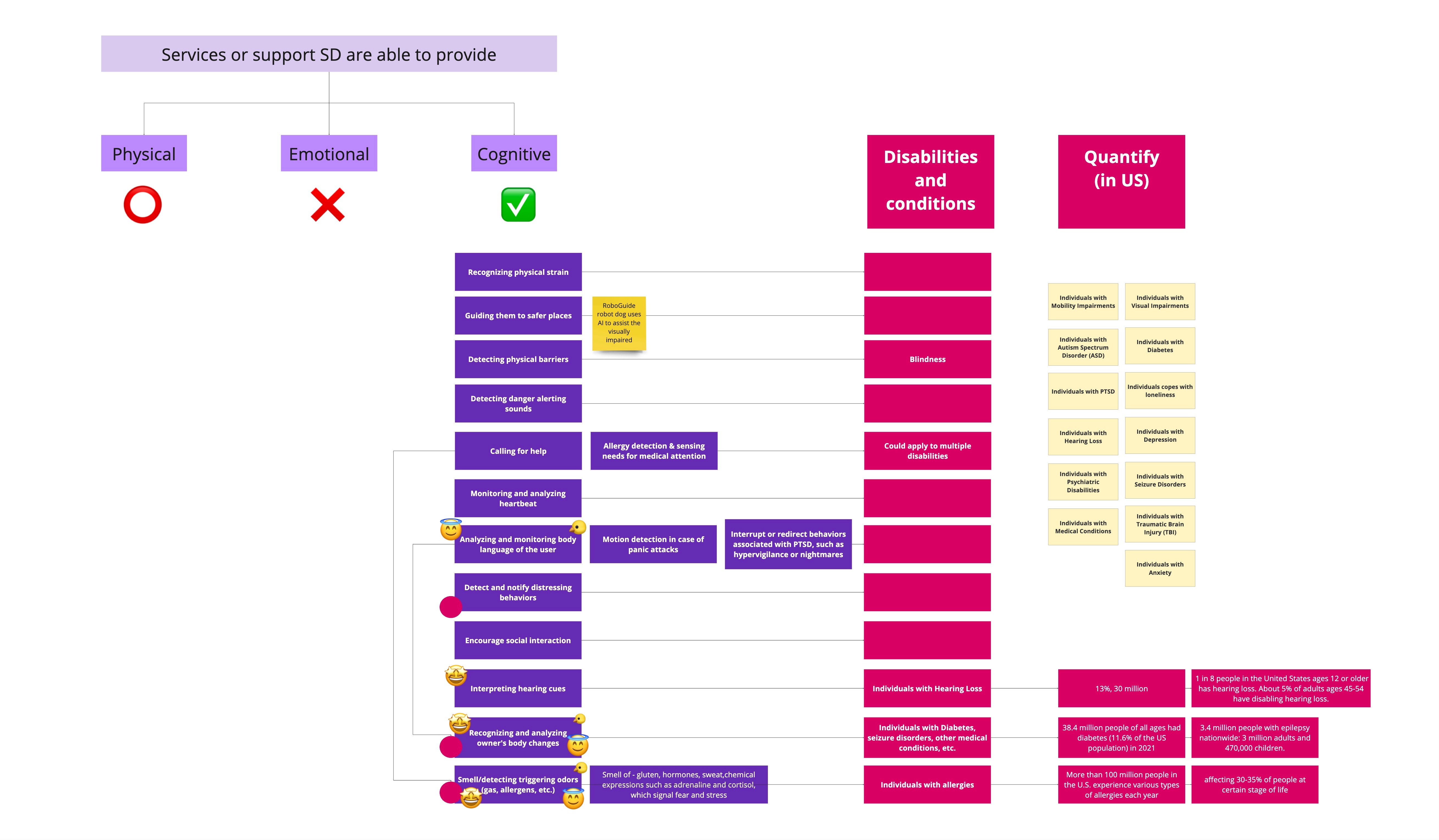
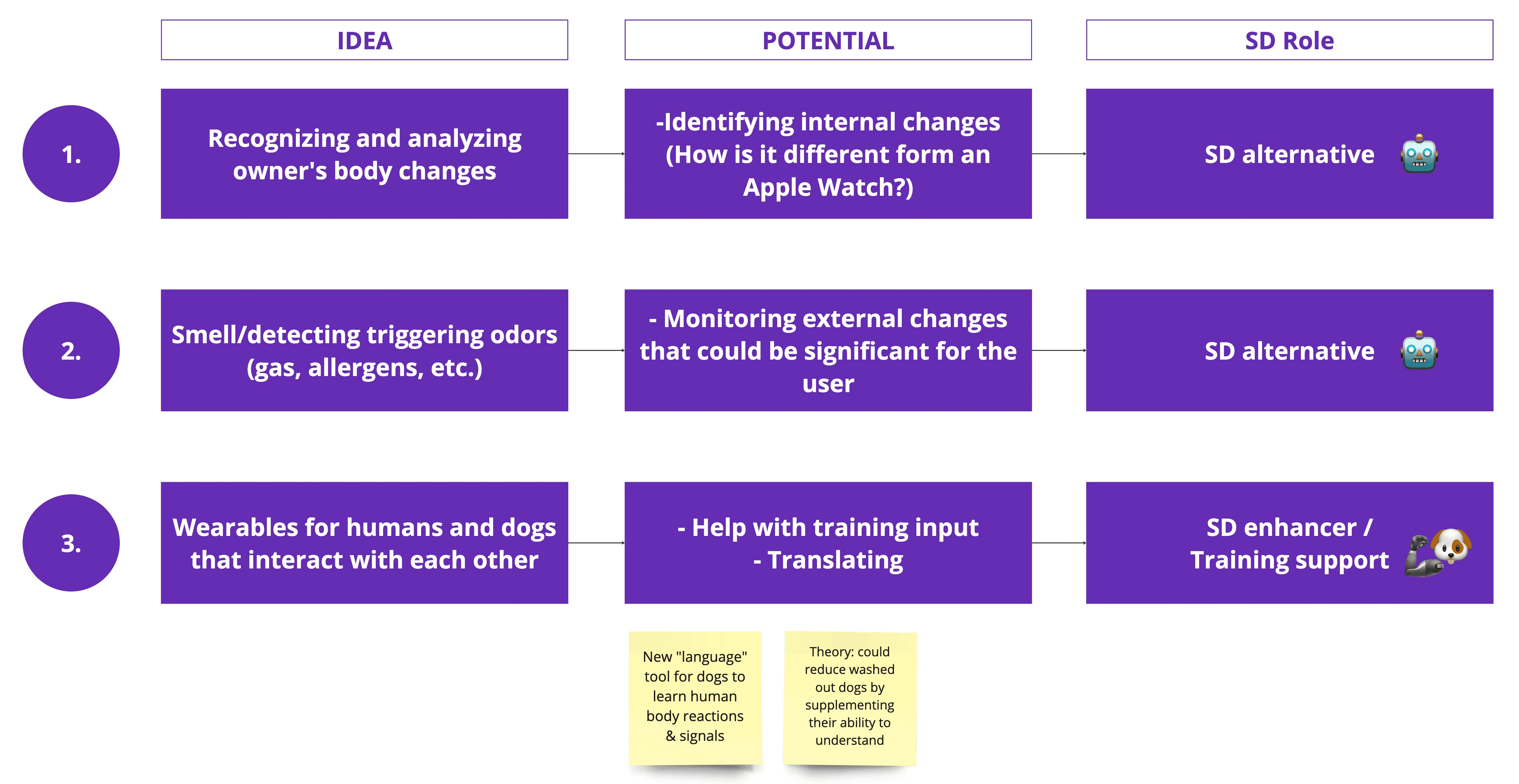
Finalizing Idea
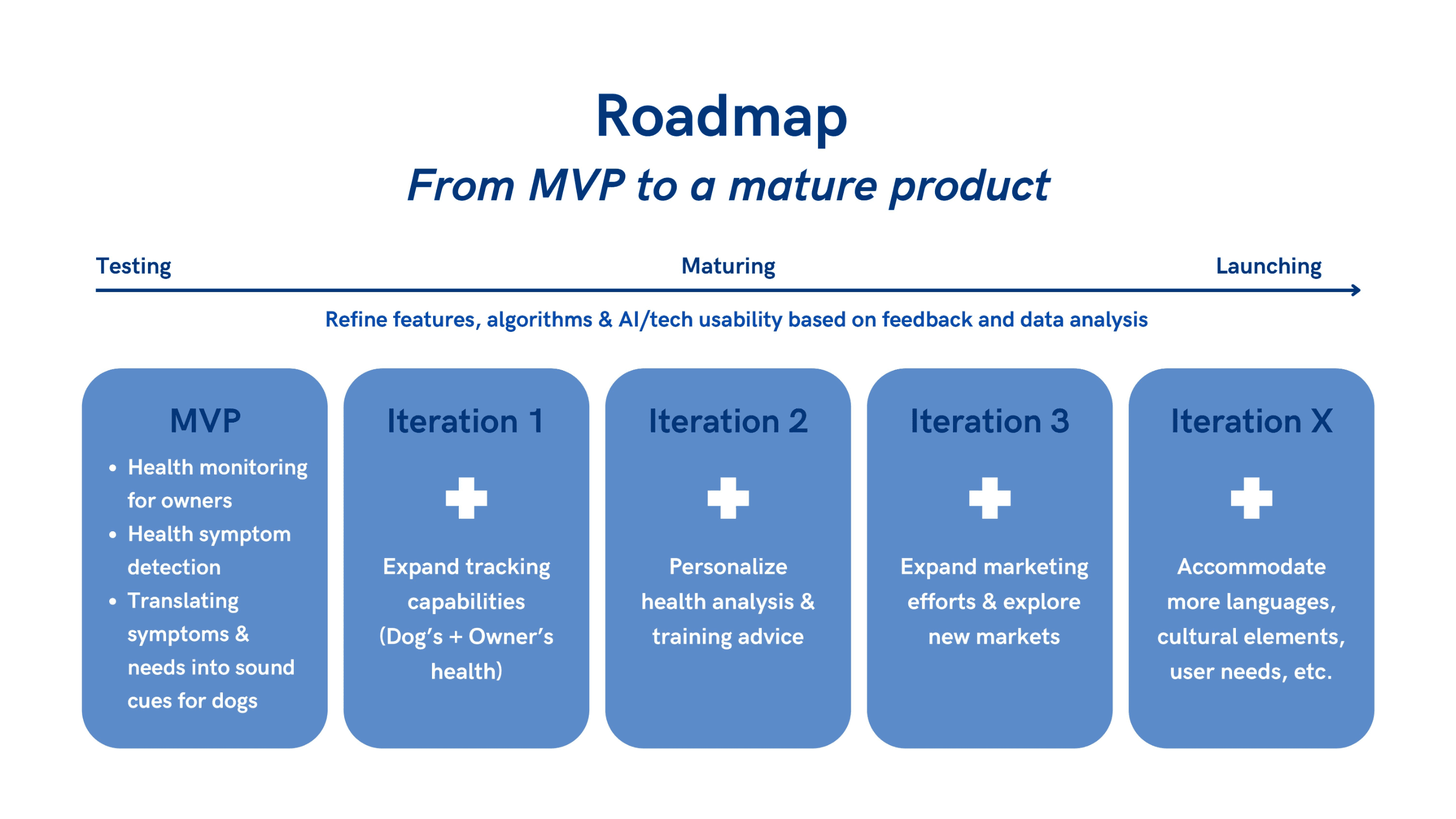
Prototyping and MVP
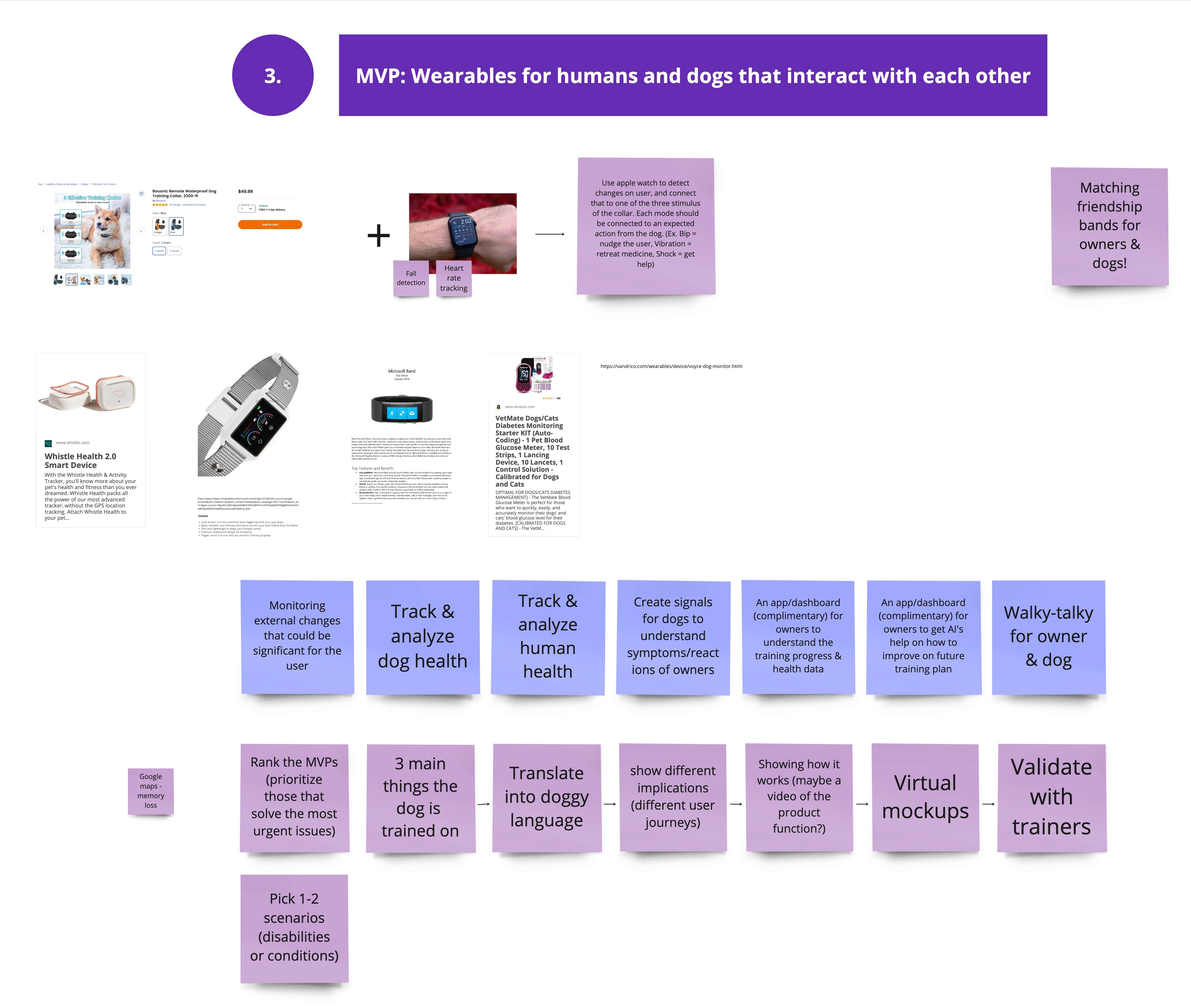
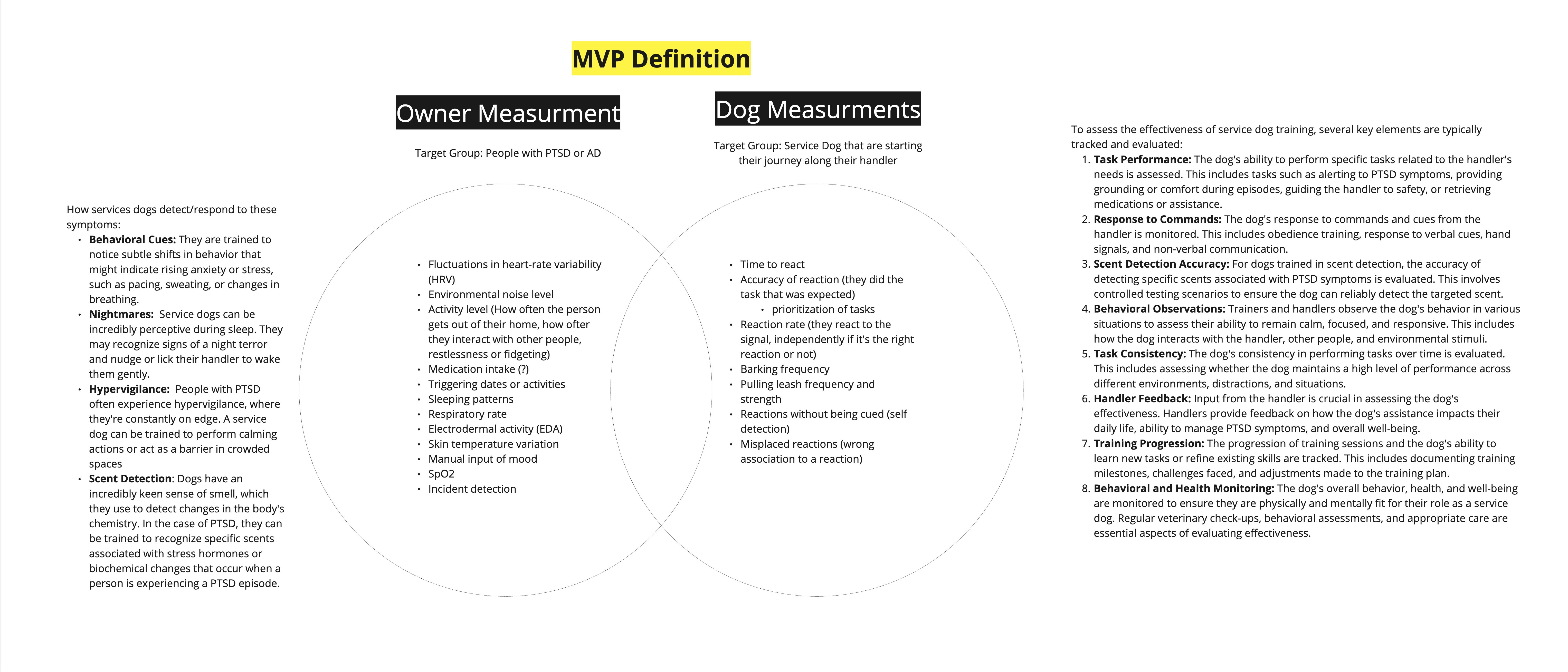
Minimum Viable Product
Learnings & Reflections
This project was an incredible opportunity to collaborate with 11 Microsoft employees, engineers, and AI
industry experts, refining my design thinking and problem-solving approach. Working with the Accessibility
Head Designer at Microsoft, who provided weekly updates, strengthened my ability to incorporate accessibility-
first design principles. I also brushed up on motion graphics and learned to adapt to different working styles,
improving my teamwork and communication as a designer.